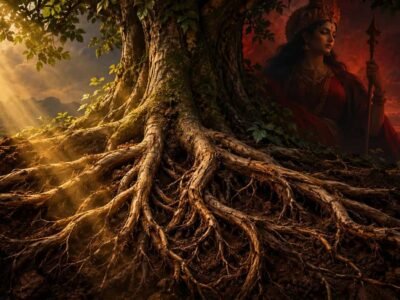
Magha Nakshatra is the tenth of the 27 Nakshatras in Vedic astrology. It occupies the opening 13°20′ of sidereal Leo (Simha Rashi), from 0°00′ to 13°20′ Leo. Its ruling planet in the Vimshottari Dasha system is Ketu, its presiding deities are the Pitris, or ancestral beings, and its principal symbol is a royal throne.
The name Magha is commonly associated with ideas of greatness, might or magnificence. In traditional Jyotish, this Nakshatra is linked with ancestry, heritage, dignity, rank, responsibility and the traditions passed from one generation to the next. The throne symbol suggests not only status but also the duties that come with holding a position of trust.
People whose Moon is placed in Magha are sometimes interpreted as proud, tradition-conscious, independent or interested in leadership and legacy. These are symbolic astrological interpretations, not scientifically established personality assessments or guaranteed predictions. A full reading considers the complete birth chart, including the Sun, Ketu, houses, aspects and planetary periods.
KEY POINTS
- Tenth of the 27 Nakshatras, spanning 0°00′–13°20′ sidereal Leo.
- Ruled by Ketu in the Vimshottari Dasha system; the sign lord of Leo is the Sun.
- Presiding deities are the Pitris, traditionally associated with ancestors.
- The royal throne or palanquin is the principal symbol, associated with lineage, dignity, authority and responsibility.
- The four pada syllables are Ma (मा), Mi (मी), Mu (मू) and Me (मे).
- Classified as Ugra (fierce or intense) in traditional Muhurta systems; this is a ritual category, not a moral judgement about people.
Key Facts About Magha Nakshatra
| Attribute | Details |
|---|---|
| Nakshatra number | 10th of the 27 Nakshatras |
| Sanskrit name | Magha (मघा) |
| Zodiac sign | Leo (Simha Rashi) |
| Zodiac range | 0°00′–13°20′ Leo |
| Total span | 13°20′ |
| Nakshatra lord | Ketu |
| Leo sign lord | Sun (Surya) |
| Presiding deities | Pitris (ancestral beings) |
| Main symbol | Royal throne; also described as a palanquin in some traditions |
| Gana | Rakshasa Gana |
| Yoni | Rat, traditionally classified as male |
| Nadi | Antya Nadi |
| Pada 1 syllable | Ma (मा) |
| Pada 2 syllable | Mi (मी) |
| Pada 3 syllable | Mu (मू) |
| Pada 4 syllable | Me (मे) |
| Navamsa signs | Aries, Taurus, Gemini and Cancer |
| Traditional Muhurta nature | Ugra (fierce or intense) |
| Traditional themes | Ancestry, dignity, leadership, continuity and duty |
Gana, yoni and nadi are traditional categories used in Jyotish compatibility systems. They are not scientific descriptions of a person’s character, and they should not be used alone to judge a relationship.
What Does Magha Nakshatra Mean?
Magha is commonly explained through meanings such as “the great,” “mighty” or “magnificent,” although translations and interpretations can vary. Its association with Leo and the image of a throne gives it a strong symbolic connection with rank, dignity, inheritance and the public responsibilities attached to authority.
The throne is not simply a sign of luxury. In a traditional royal setting, a seat of authority represents both privilege and obligation: a leader is expected to protect, preserve order and act in a way that honours the people or institution they represent. Magha’s symbolism can therefore be read as a question of how inherited influence is used.
Because the Pitris are its presiding deities, Magha also draws attention to family history, memory, ancestral customs and the relationship between earlier generations and the present. These themes can be understood culturally and symbolically without assuming that every person with a Magha placement has the same family background or values.
CENTRAL THEMES OF MAGHA
- ✓ Ancestry and continuity: Remembering family history, traditions and the contributions of earlier generations.
- ✓ Dignity and self-respect: Acting with composure while recognising the dignity of others.
- ✓ Leadership and service: Treating authority as a responsibility rather than only a personal reward.
- ✓ Tradition and ritual: Valuing ceremonies, customs and practices that preserve a shared identity.
- ✓ Legacy: Considering what one leaves behind and how present choices affect future generations.
These are interpretive themes in Vedic astrology, not fixed qualities that can be assumed about every person associated with Magha.
The Symbol of Magha Nakshatra: The Royal Throne
The royal throne is the best-known symbol of Magha Nakshatra. A throne suggests authority, recognition and a place within a lineage or established order. In traditional interpretation, it can also represent the expectations that accompany status: the person who occupies the seat is accountable for how that position is used.
This symbolism can apply beyond royalty. It may be used as a metaphor for taking responsibility in a family, leading an organisation, preserving a craft or maintaining an institution that existed before one’s arrival. In that sense, Magha is concerned with the relationship between what is inherited and what is built through personal effort.
The shadow side of throne symbolism is the temptation to mistake recognition for personal superiority. Respect is more durable when it is supported by fairness, competence and consideration for other people. A useful reading of Magha therefore balances confidence with humility and tradition with the ability to learn.
Some descriptions also use a palanquin as a related symbol. The details of symbolic lists can vary across astrological sources, but both images convey rank, ceremonial importance and a position carried or supported by a wider community.
Who Are the Pitris?
The Pitris are ancestral beings or forefathers honoured in Hindu religious traditions. They appear in discussions of lineage, remembrance and rites performed for departed family members. Their place in ritual and scripture varies by tradition, but their association with Magha gives this Nakshatra a distinctive connection with ancestry and obligations across generations.

Ancestor remembrance is expressed through different customs, including family prayers, offerings and observances associated with Shraddha or Pitru Paksha in many Hindu communities. Practices differ by region, lineage, family tradition and calendar, so one custom should not be presented as universal for every household.
In astrological symbolism, the Pitris can represent gratitude for those who came before, an awareness of inherited circumstances and a wish to preserve what is beneficial. This does not mean that a person’s future is fixed by their ancestors, nor does a Magha placement establish anything about a family’s spiritual condition.
SYMBOLIC ASSOCIATIONS OF THE PITRIS
- ✓ Remembering ancestors and acknowledging the contributions of earlier generations.
- ✓ Preserving family stories, useful traditions and cultural knowledge.
- ✓ Recognising responsibilities that accompany inheritance or family leadership.
- ✓ Reflecting on how present actions may affect children and future generations.
- ✓ Practising gratitude without assuming that family history determines a person’s choices.
These are symbolic interpretations. Religious beliefs and ancestral observances have meanings beyond astrology and should be understood within the traditions in which they are practised.
Ketu: The Ruling Planet of Magha Nakshatra
Ketu is the ruling planet of Magha Nakshatra in the Vimshottari Dasha system. In traditional astrology, Ketu is associated with detachment, introspection, spiritual inquiry, unusual paths and a reduced attachment to outward status. Magha, however, lies entirely within Leo, whose sign ruler is the Sun. The Nakshatra lord and the sign lord are therefore different: Ketu rules Magha, while the Sun rules Leo.
The Sun is traditionally associated with authority, identity, vitality, visibility and leadership. Ketu is often interpreted through separation, inward reflection and questions about what lies beyond material recognition. Read together, these symbols can create a traditional theme of examining the meaning of status: what deserves respect, what is merely appearance and how authority can be used responsibly.
This combination is not necessarily contradictory. A person may take responsibility in public life while also questioning social expectations or seeking a purpose beyond praise. Conversely, status may become a source of tension if someone relies too heavily on external approval or treats inherited position as proof of superiority.
The actual interpretation depends on the full birth chart, including the Sun and Ketu’s placements, dignity, conjunctions, aspects, house rulerships and planetary periods. A Nakshatra by itself cannot establish a person’s character, success or future.
Magha Nakshatra Personality Traits
Traditional descriptions of Magha often emphasise dignity, loyalty to heritage, leadership, independence and a strong sense of identity. The throne symbol directs attention to responsibility and public conduct, while the Pitris connect the Nakshatra with memory, ancestry and continuity. These themes can be expressed in different ways depending on the wider chart and the individual’s own experiences.
The following list is a summary of common astrological interpretations, not a scientific personality test. A person may relate to some descriptions and not to others, and the placement should never be used to make a definitive judgement about someone.
STRENGTHS
- ✓ Respect for family history and cultural traditions
- ✓ Strong sense of dignity and self-respect
- ✓ Willingness to take responsibility
- ✓ Interest in leadership and organisation
- ✓ Loyalty to people and institutions they value
- ✓ Ability to maintain composure in formal settings
- ✓ Confidence when making decisions
- ✓ Appreciation for ceremony and shared identity
- ✓ Desire to create a lasting legacy
- ✓ Readiness to protect dependants or a team
- ✓ Pride in craftsmanship and achievement
- ✓ Independent thinking about social expectations
CHALLENGES
- ✕ Pride becoming arrogance or entitlement
- ✕ Overreliance on status or recognition
- ✕ Difficulty accepting criticism
- ✕ Rigid attachment to old customs
- ✕ Expecting deference from others
- ✕ Sensitivity to perceived disrespect
- ✕ Using family reputation to avoid accountability
- ✕ Conflicts over authority or control
- ✕ Judging people by rank or background
- ✕ Resistance to admitting mistakes
- ✕ Taking on obligations mainly for appearances
- ✕ Difficulty separating personal worth from achievement
The Four Padas of Magha Nakshatra
Magha Nakshatra is divided into four padas, or quarters. Each pada covers 3°20′ of the zodiac, and all four remain within Leo in the main zodiac chart. Their Navamsa signs differ—Aries, Taurus, Gemini and Cancer—adding four traditional interpretive layers to Magha’s symbolism.
The commonly used naming syllables are Ma, Mi, Mu and Me. The precise syllable is determined by the Moon’s sidereal longitude at birth, not simply by the calendar date. Transliteration into English may differ slightly between languages, while the Devanagari forms shown here are commonly used.
Magha Nakshatra Pada 1
Degree range: 0°00′–3°20′ Leo
Navamsa sign: Aries
Navamsa ruler: Mars
Traditional naming syllable: Ma (मा)
Purushartha association: Dharma
The first pada falls in Aries Navamsa, traditionally ruled by Mars. Aries symbolism is associated with initiative, courage, directness and the willingness to begin. In a Magha interpretation, this can emphasise the urge to lead, take charge or establish a clear direction while honouring a sense of identity and responsibility.
Its constructive expression may include decisiveness, courage and a readiness to act when others hesitate. Its challenge can be impatience or assuming that leadership means having the final word. Listening, planning and accepting shared responsibility can help balance the action-oriented symbolism.
Magha Nakshatra Pada 2
Degree range: 3°20′–6°40′ Leo
Navamsa sign: Taurus
Navamsa ruler: Venus
Traditional naming syllable: Mi (मी)
Purushartha association: Artha
The second pada falls in Taurus Navamsa, ruled by Venus. Taurus is traditionally associated with stability, resources, value, comfort and sustained effort. This combination can be interpreted as placing more emphasis on material security, maintaining institutions and turning authority into lasting results.
A constructive expression may include patience, practical judgement and an interest in protecting resources for the future. A possible challenge is becoming attached to possessions, status or familiar systems even when changes are necessary. Stability is most useful when it supports growth rather than preventing it.
Magha Nakshatra Pada 3
Degree range: 6°40′–10°00′ Leo
Navamsa sign: Gemini
Navamsa ruler: Mercury
Traditional naming syllable: Mu (मू)
Purushartha association: Kama
The third pada falls in Gemini Navamsa, ruled by Mercury. Gemini is traditionally connected with communication, learning, curiosity and exchanging ideas. This pada may be interpreted as expressing Magha’s leadership and heritage themes through speaking, teaching, networking or sharing knowledge from one generation to another.
Its strengths may include persuasive communication, curiosity and an ability to explain complex matters. The challenge is using words to protect one’s image, becoming overly concerned with public opinion or spreading an old view without checking whether it remains accurate.
Magha Nakshatra Pada 4
Degree range: 10°00′–13°20′ Leo
Navamsa sign: Cancer
Navamsa ruler: Moon
Traditional naming syllable: Me (मे)
Purushartha association: Moksha
The fourth pada falls in Cancer Navamsa, ruled by the Moon. Cancer is traditionally associated with family, memory, emotional security and care. In this pada, Magha’s ancestral theme may be interpreted as a stronger concern with family belonging, the emotional meaning of traditions and the wish to protect people who depend on one another.
A constructive expression may involve preserving family memories, offering care and building a sense of continuity. The challenge can be becoming overly attached to the past, taking family expectations too personally or allowing old disagreements to shape present relationships. Respecting heritage does not require repeating every inherited pattern.
Magha Padas at a Glance
| Pada | Degree range | Navamsa | Ruler | Syllable | Traditional emphasis |
|---|---|---|---|---|---|
| 1 | 0°00′–3°20′ Leo | Aries | Mars | Ma (मा) | Initiative and leadership |
| 2 | 3°20′–6°40′ Leo | Taurus | Venus | Mi (मी) | Stability and resources |
| 3 | 6°40′–10°00′ Leo | Gemini | Mercury | Mu (मू) | Communication and learning |
| 4 | 10°00′–13°20′ Leo | Cancer | Moon | Me (मे) | Family and emotional continuity |
Dharma, Artha, Kama and Moksha are the four traditional Purusharthas, or aims of life. They are commonly mapped in this pada sequence to the four Navamsa signs. This is a traditional interpretive scheme; sources may differ in how they describe the main theme of a Nakshatra versus the finer meaning of each pada.
POSITIVE TRAITS TRADITIONALLY ASSOCIATED WITH MAGHA
- ✓ 1. Dignity: Valuing self-respect and treating others with consideration.
- ✓ 2. Responsibility: Recognising that authority comes with duties and consequences.
- ✓ 3. Leadership: Taking initiative when a group needs direction.
- ✓ 4. Loyalty: Standing by trusted people and commitments.
- ✓ 5. Respect for heritage: Taking an interest in family, history and cultural memory.
- ✓ 6. Composure: Maintaining a steady manner in formal or demanding situations.
- ✓ 7. Courage: Addressing difficult decisions instead of avoiding them.
- ✓ 8. Independence: Forming personal views rather than relying entirely on approval.
- ✓ 9. Organisational ability: Helping establish roles, processes or clear responsibilities.
- ✓ 10. Protectiveness: Looking out for people or institutions placed in one’s care.
- ✓ 11. Pride in quality: Wanting work to reflect care, skill and a strong standard.
- ✓ 12. Long-term thinking: Considering how choices may affect future generations.
- ✓ 13. Ceremony and respect: Understanding the meaning that rituals and shared customs can hold for a community.
- ✓ 14. Accountability: Being prepared to answer for decisions made in a position of responsibility.
- ✓ 15. Generosity: Using resources or influence to support others when appropriate.
- ✓ 16. Preservation: Maintaining useful knowledge, skills and traditions.
- ✓ 17. Confidence: Speaking or acting with conviction when there is a sound basis for doing so.
- ✓ 18. Strategic judgement: Weighing reputation, responsibilities and practical consequences before acting.
- ✓ 19. Commitment: Sustaining effort when a meaningful task becomes demanding.
- ✓ 20. Sense of continuity: Connecting past experience with present decisions.
- ✓ 21. Mentorship: Passing useful skills and experience to younger or newer members of a group.
- ✓ 22. Fairness: Recognising that a leadership role should serve people, not just personal prestige.
CHALLENGES SOMETIMES LINKED WITH MAGHA
- ✓ 1. Arrogance: Treating status or achievements as proof of greater personal worth.
- ✓ 2. Entitlement: Expecting privileges without accepting matching responsibilities.
- ✓ 3. Sensitivity to criticism: Interpreting feedback as an attack on dignity.
- ✓ 4. Rigidity: Preserving a custom simply because it is old or familiar.
- ✓ 5. Dependence on recognition: Measuring self-worth mainly through praise, rank or reputation.
- ✓ 6. Control: Finding it difficult to share authority or trust other people’s methods.
- ✓ 7. Image management: Prioritising appearances over honest problem-solving.
- ✓ 8. Family pressure: Allowing inherited expectations to overrule personal needs or fair judgement.
- ✓ 9. Status-based judgement: Assessing people by title, wealth or background instead of behaviour.
- ✓ 10. Reluctance to apologise: Viewing an admission of error as a loss of face.
- ✓ 11. Old resentments: Carrying past family or community disputes into present relationships.
- ✓ 12. Over-responsibility: Taking on too much because asking for help feels uncomfortable.
- ✓ 13. Resistance to change: Confusing respect for heritage with refusing all new ideas.
- ✓ 14. Overbearing leadership: Expecting obedience instead of explaining decisions and hearing others.
These strengths and challenges are traditional interpretive descriptions. They should not be used to label an individual or predict their conduct. Real behaviour is shaped by personal choices, circumstances, upbringing and many other influences beyond an astrological placement.
Magha Nakshatra Career and Professional Life
Magha’s traditional themes of leadership, continuity, recognition and responsibility are often used to discuss professional roles that involve stewardship, organisation, managing people or preserving important knowledge. This is a symbolic association rather than a career prediction. Education, skills, experience, opportunity and personal interest should guide real career decisions.
CAREER AREAS SOMETIMES ASSOCIATED WITH MAGHA
- ✓ Leadership and management: Roles involving decision-making, team coordination and accountability.
- ✓ Entrepreneurship: Building an organisation, developing a family enterprise or carrying a long-term vision forward.
- ✓ Public administration: Work that involves institutions, formal procedures and public responsibility.
- ✓ History and cultural preservation: Research, archives, museums, heritage work or the preservation of traditional skills.
- ✓ Education and mentoring: Sharing knowledge, training others and supporting the next generation.
- ✓ Law and governance: Work involving rules, institutions, representation and accountability, with appropriate training.
- ✓ Event and ceremonial management: Organising formal occasions, cultural programmes or community functions.
- ✓ Family business and stewardship: Maintaining useful systems while adapting them to present needs.
- ✓ Communications and public relations: Representing an organisation with clarity, honesty and awareness of its reputation.
A traditional reading cannot determine which career will be successful for an individual. It is more useful to treat the themes above as prompts for reflection and compare them with actual interests, qualifications, working conditions and goals.
Magha Nakshatra in Love and Relationships
In traditional interpretations, Magha’s themes of dignity, loyalty and family continuity can be applied to relationships that value respect, commitment and shared responsibilities. Some readings describe a preference for a partner who respects family ties or understands the importance of long-term commitments. This should not be taken to mean that everyone with Magha placements has the same relationship needs.
The constructive side of this symbolism is reliability: showing up for a partner, protecting mutual trust and taking promises seriously. Family traditions may be meaningful to a person, but a healthy relationship also needs room for both partners’ individual values, boundaries and choices.
Possible difficulties arise when pride makes it hard to apologise, when family expectations become more important than the couple’s agreement, or when respect is confused with obedience. Open communication helps clarify which customs both people wish to keep and where they need to establish their own approach.
RELATIONSHIP TIPS FOR MAGHA
- Show respect through everyday behaviour, not only formal gestures or public appearances.
- Discuss family traditions and boundaries before they become a source of conflict.
- Treat apologies and compromise as signs of maturity rather than weakness.
- Make important choices together instead of expecting a partner to follow one person’s family rules.
- Recognise your partner’s achievements and dignity without turning the relationship into a contest for status.
Magha Nakshatra and Family Life
The Pitris association makes family memory and ancestry central to Magha’s traditional symbolism. A reading may therefore emphasise interest in family history, respect for elders, passing on skills or taking responsibility when relatives need help. Family experiences differ widely, however, and a Nakshatra does not tell us whether someone’s family relationships will be supportive or difficult.
Magha’s heritage theme can be positive when it encourages gratitude, cultural understanding and continuity. It can become burdensome when someone feels required to preserve every tradition regardless of its effects. Healthy continuity allows a family to keep what is meaningful while changing practices that no longer serve its members.
A balanced interpretation also recognises that elders and younger relatives can learn from one another. Respect does not need to prevent questions, and independence does not require rejecting every inherited value. Listening, clear boundaries and fair treatment matter more than assumptions based on birth-star descriptions.
Magha Nakshatra and Traditional Muhurta
In many traditional Muhurta classifications, Magha is described as an Ugra Nakshatra, often translated as fierce, forceful or intense. This label belongs to a system used to assess the symbolic suitability of a Nakshatra for different activities at a particular time. It is not a statement that people born under Magha are cruel, dangerous or morally inferior.
Some traditional Muhurta guides associate Ugra Nakshatras with forceful, competitive or confrontational undertakings, while they may not recommend them for every gentle, celebratory or relationship-centred ceremony. The specific guidance varies by text and regional practice, and selecting a Muhurta traditionally involves more than the Nakshatra alone.
Magha’s association with the Pitris also links it symbolically with ancestral remembrance and certain family rites. The actual date and method of observances such as Shraddha depend on the relevant lunar calendar, local custom and family tradition. Consult the Panchang or tradition followed by the household for a real ritual date.
No astrological classification has been scientifically established as a way to guarantee an outcome. Muhurta should be understood as a cultural and religious practice rather than a substitute for practical planning, professional advice or informed consent.
How to Interpret Magha Nakshatra in a Birth Chart
Magha is best interpreted as one part of the full horoscope, not as a stand-alone description of a person. First, identify which planet occupies Magha. The Moon’s Nakshatra is particularly important in many Jyotish traditions because it is used to determine the Janma Nakshatra and the starting point of the Vimshottari Dasha sequence.
Next, consider the pada. Magha’s four padas fall in Aries, Taurus, Gemini and Cancer Navamsas. Traditional astrologers use these placements as an additional interpretive layer, alongside the placement and condition of the Navamsa lord. The pada may refine a reading, but it does not replace analysis of the full chart.
The Sun is the sign lord of Leo, while Ketu is the Nakshatra lord of Magha. Traditional interpretation may examine both planets, relevant houses, aspects, conjunctions and planetary periods. Two people with the Moon in Magha can have different charts, personal histories and choices, so broad descriptions should not be treated as identical predictions.
Astrology is a traditional interpretive system, not a scientifically established method for determining personality or forecasting an individual’s future. Its symbolism can be explored for cultural or personal reflection, but it should not be treated as a definitive assessment or used alone for major decisions.
FAQs
What is Magha Nakshatra?
Magha is the tenth of the 27 Nakshatras in Vedic astrology. It spans 0°00′ to 13°20′ of sidereal Leo and is traditionally associated with ancestors, dignity, lineage and the symbolism of a royal throne.
Which planet rules Magha Nakshatra?
Ketu is the ruling planet of Magha in the Vimshottari Dasha system. Leo, the zodiac sign containing all four padas, is ruled by the Sun.
Who are the deities of Magha Nakshatra?
The presiding deities are the Pitris, ancestral beings honoured in Hindu traditions. Their association links Magha symbolically with remembrance, lineage and obligations across generations.
What is the symbol of Magha Nakshatra?
The main symbol is a royal throne; some sources also mention a palanquin. The symbolism is traditionally connected with authority, dignity, lineage and the responsibility that accompanies status.
What are the four padas of Magha Nakshatra?
Pada 1 is Aries Navamsa (Ma), Pada 2 is Taurus Navamsa (Mi), Pada 3 is Gemini Navamsa (Mu), and Pada 4 is Cancer Navamsa (Me). Each covers 3°20′ of the zodiac.
What is the zodiac range of Magha Nakshatra?
Magha spans 0°00′–13°20′ sidereal Leo (Simha Rashi), a total of 13°20′.
What is the Gana, Yoni and Nadi of Magha?
Common traditional compatibility tables classify Magha as Rakshasa Gana, Rat Yoni and Antya Nadi. These are symbolic categories used in Jyotish matching, not scientific descriptions of personality or relationship quality.
What does Ugra mean in Magha Nakshatra?
Ugra is a traditional Muhurta label commonly translated as fierce or intense. It is used when assessing the symbolic suitability of a time for certain activities; it is not a judgement about the character of people born under Magha.
Which naming syllables are associated with Magha?
The commonly used syllables are Ma (मा) for Pada 1, Mi (मी) for Pada 2, Mu (मू) for Pada 3 and Me (मे) for Pada 4. The pada depends on the Moon’s exact sidereal longitude at birth.
Does Magha Nakshatra guarantee leadership or wealth?
No. Traditional readings associate Magha with leadership, dignity and lineage, but a Nakshatra alone cannot guarantee wealth, authority, career success or any other life outcome. Astrology is not a scientifically validated predictive method.
Magha Nakshatra opens the sign of Leo in the traditional sidereal zodiac and is known for its association with the Pitris and the royal throne. Its central themes include ancestry, dignity, leadership, continuity and the responsibilities that come with inherited or earned authority.
The four padas add traditional nuances through Aries, Taurus, Gemini and Cancer Navamsas. These distinctions offer a framework used by Jyotish practitioners, but they do not determine a person’s character or future on their own.
A balanced way to approach Magha is to see tradition as a source of learning rather than an unquestionable rule. Respect is strengthened by fairness, leadership by accountability, and legacy by the care taken with present choices.
Disclaimer: This article explores traditional Vedic astrological concepts for educational and cultural purposes. Astrological personality descriptions and predictions are not scientifically established facts and should not be treated as definitive assessments of any individual.