

Purva Phalguni Nakshatra is the 11th of the 27 Nakshatras in Vedic astrology. It spans 13°20′ to 26°40′ of sidereal Leo (Simha Rashi). Its ruling planet in the Vimshottari Dasha system is Venus, its presiding deity is Bhaga, and its principal symbol is the front legs of a bed or cot.
In traditional Jyotish, Purva Phalguni is associated with pleasure, creativity, affection, rest, hospitality, celebration and the ability to enjoy the results of effort. The deity Bhaga connects it with good fortune, shared prosperity and enjoyment, while Venus adds themes of art, relationships, beauty and comfort.
People with the Moon in Purva Phalguni are often described in astrological texts as warm, sociable, expressive and drawn to creative or enjoyable experiences. These are traditional interpretations, not universal personality facts. A complete birth-chart reading considers the whole chart, and astrology is not a scientifically established way to predict a person’s character or future.
KEY POINTS
- 11th of the 27 Nakshatras, spanning 13°20′–26°40′ sidereal Leo.
- Ruled by Venus in the Vimshottari Dasha system; Leo itself is ruled by the Sun.
- Presiding deity is Bhaga, traditionally associated with fortune, prosperity and enjoyment.
- Main symbol is the front legs of a bed or cot; a hammock is another familiar symbolic image.
- Traditional themes include creativity, affection, comfort, celebration and responsible enjoyment.
Key Facts About Purva Phalguni Nakshatra
| Attribute | Details |
|---|---|
| Nakshatra number | 11th of the 27 Nakshatras |
| Sanskrit name | Purva Phalguni (पूर्वा फाल्गुनी) |
| Zodiac sign | Leo (Simha Rashi) |
| Zodiac range | 13°20′–26°40′ Leo |
| Nakshatra lord | Venus (Shukra) |
| Leo sign lord | Sun (Surya) |
| Presiding deity | Bhaga |
| Main symbol | Front legs of a bed or cot; hammock in some depictions |
| Gana | Manushya Gana |
| Yoni | Rat, traditionally classified as female in compatibility tables |
| Nadi | Madhya Nadi; often labelled Pitta in some systems |
| Pada 1 syllable | Mo (मो) |
| Pada 2 syllable | Ta / Taa (टा) |
| Pada 3 syllable | Ti / Tee (टी) |
| Pada 4 syllable | Tu / Too (टू) |
| Navamsa signs | Leo, Virgo, Libra and Scorpio |
| Traditional themes | Creativity, affection, rest, pleasure and shared prosperity |
Gana, yoni and nadi are traditional Jyotish classifications used especially in compatibility systems. They are not scientific descriptions of a person, and different traditions may present some labels or their interpretations differently.
What Does Purva Phalguni Nakshatra Mean?
Purva means “former” or “earlier,” distinguishing Purva Phalguni from Uttara Phalguni, the later Nakshatra in the pair. The name belongs to an old Indian system of lunar mansions used in Jyotish and traditional calendars.
Purva Phalguni occupies part of Leo, a sign symbolically linked with visibility, confidence, self-expression and leadership. Its Venus rulership adds another layer: beauty, artistic expression, connection, comfort and the desire to enjoy life. Together, these associations make Purva Phalguni a Nakshatra often linked with social warmth and the creative side of personal expression.
The traditional symbolism is not simply about luxury or leisure. Rest can support renewed effort; affection can strengthen relationships; and pleasure can be part of a balanced life. The challenge in this symbolism is maintaining responsibility while enjoying the good things life offers.
CORE THEMES OF PURVA PHALGUNI
- ✓ Creativity and expression: Art, performance, design, storytelling and other ways of sharing ideas or beauty.
- ✓ Affection and connection: Romance, friendship, hospitality and the wish to create welcoming social spaces.
- ✓ Rest and enjoyment: Relaxation, recreation and taking time to appreciate the results of hard work.
- ✓ Shared prosperity: Enjoyment, resources and good fortune understood through the traditional deity Bhaga.
- ✓ Balance: Using comfort and confidence constructively instead of allowing indulgence or approval-seeking to take over.
Some astrological traditions classify Purva Phalguni as an Ugra or Krura Nakshatra in Muhurta groupings. Such labels belong to a technical system for assessing timing; they should not be read as a moral judgement about people born under the Nakshatra. Different panchang traditions may discuss suitability for particular activities differently.
The Symbol of Purva Phalguni Nakshatra: The Front Legs of a Bed
The front legs of a bed or cot are the principal symbol associated with Purva Phalguni. A hammock is also used in some modern explanations. These images draw attention to rest, intimacy, comfort, leisure and the private spaces in which people relax and connect with others.
A bed is not only a symbol of sleep. In traditional symbolism, it can also point to partnership, affection, recreation and the ability to pause after effort. This is why Purva Phalguni is commonly associated with romance, pleasure, artistic enjoyment and social life.
The symbol can also be read as a reminder that comfort works best when it is supported by healthy boundaries and responsibility. Too much focus on relaxation may delay important work, while excessive concern with pleasing others can make personal choices harder. The balanced expression is to make room for pleasure without neglecting commitments.
Who Is Bhaga, the Deity of Purva Phalguni?
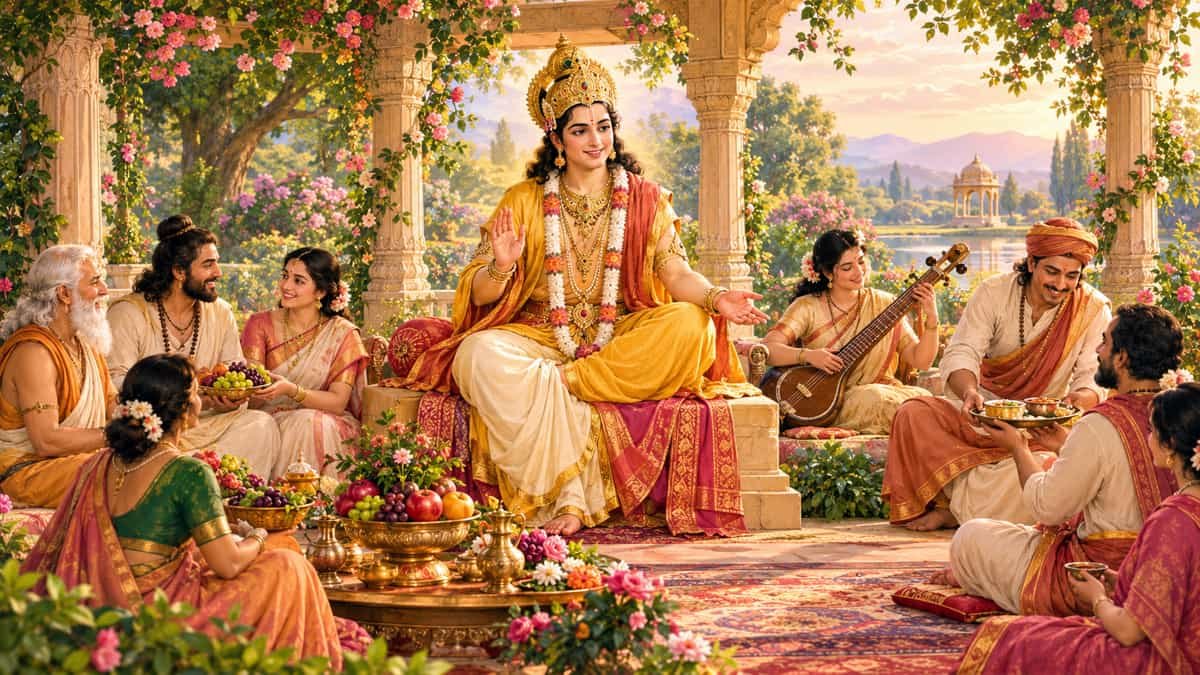
Bhaga is the presiding deity of Purva Phalguni Nakshatra. In Vedic tradition, Bhaga is one of the Adityas and is associated with fortune, prosperity, a share of good things and enjoyment. His symbolism is often used to explain why Purva Phalguni is connected with pleasure, social bonds and the fair sharing of resources.
Bhaga’s role gives the Nakshatra a broader meaning than personal luxury. Enjoyment can be shared through friendship, family gatherings, art, hospitality and generosity. The theme also raises a question of balance: what a person receives and enjoys can be used thoughtfully, rather than becoming a reason to ignore other people’s needs.
SYMBOLIC EXPRESSIONS OF BHAGA
- ✓ Appreciating life’s comforts while recognising the effort behind them.
- ✓ Sharing resources, opportunities or celebrations with others.
- ✓ Building warm social connections through hospitality and generosity.
- ✓ Using creativity to bring enjoyment or beauty into everyday life.
- ✓ Recognising that good fortune is interpreted within tradition, not guaranteed by a Nakshatra placement.
These are symbolic meanings within Vedic astrology and Hindu religious tradition. They do not prove that every person with a Purva Phalguni placement will experience wealth, popularity or an easy life.
Venus: The Ruling Planet of Purva Phalguni Nakshatra
Venus (Shukra) is the ruling planet of Purva Phalguni in the Vimshottari Dasha system. Purva Phalguni lies entirely within Leo, whose zodiac sign lord is the Sun. These are two distinct astrological roles: Venus is the Nakshatra lord, while the Sun rules the sign.
Venus is traditionally associated with affection, beauty, art, pleasure, diplomacy, comfort and relationship dynamics. Leo is associated with self-expression, warmth, visibility and creative confidence. Purva Phalguni interpretations often combine these themes, describing a wish to express oneself attractively, connect socially and enjoy meaningful experiences.
This combination can also be interpreted as a reminder to distinguish confidence from the need for constant admiration. Enjoying comfort is different from becoming dependent on it, and being generous is different from spending beyond one’s means to impress others.
In a birth chart, the expression attributed to Venus depends on its sign, house, aspects, conjunctions, dignity and Dasha context, along with the rest of the horoscope. A Nakshatra lord alone cannot determine an outcome.
Purva Phalguni Nakshatra Personality Traits
Traditional descriptions often portray Purva Phalguni as expressive, affectionate, sociable and interested in creative or enjoyable activities. Some interpretations emphasise charm and hospitality, while others focus on the desire for comfort, recognition or romantic connection.
These descriptions are not a psychological test and should not be applied to everyone born under this Nakshatra. The table below presents qualities that traditional astrologers may associate with its symbolism, alongside possible challenges when those qualities are overused.
STRENGTHS
- ✓ Creative expression and appreciation of beauty
- ✓ Warmth in social situations
- ✓ Affectionate and relationship-oriented attitude
- ✓ Hospitality and generosity
- ✓ Ability to encourage others
- ✓ Enthusiasm for arts and recreation
- ✓ Confidence in presenting ideas
- ✓ Diplomatic communication
- ✓ Enjoyment of shared experiences
- ✓ Sense of style and presentation
- ✓ Loyalty to meaningful friendships
- ✓ Ability to create a welcoming atmosphere
POTENTIAL CHALLENGES
- ✕ Overindulgence in comfort or entertainment
- ✕ Avoiding difficult tasks or conversations
- ✕ Seeking too much approval or praise
- ✕ Overspending to maintain a preferred lifestyle
- ✕ Sensitivity to rejection or criticism
- ✕ Jealousy or possessiveness in relationships
- ✕ Difficulty accepting limits
- ✕ Procrastination when a task feels unpleasant
- ✕ Depending on external validation
- ✕ Confusing charm with lasting commitment
- ✕ Excessive focus on appearances
- ✕ Avoiding responsibility after a setback
The Four Padas of Purva Phalguni Nakshatra
Purva Phalguni is divided into four padas, or quarters. Each pada covers 3°20′ of the zodiac. All four padas fall within Leo in the main zodiac chart, but they occupy different Navamsa signs: Leo, Virgo, Libra and Scorpio.
In traditional interpretation, the pada adds a layer of nuance to the Nakshatra. The syllables commonly used for naming are Mo, Ta, Ti and Tu. Their Devanagari forms are shown below; pronunciation or transliteration may differ slightly between regional naming practices.
Purva Phalguni Nakshatra Pada 1
Degree range: 13°20′–16°40′ Leo
Navamsa sign: Leo
Navamsa ruler: Sun
Traditional naming syllable: Mo (मो)
Purushartha association: Dharma
The first pada falls in Leo Navamsa as well as Leo in the main zodiac chart. In the traditional divisional-chart system, this placement is described as Vargottama because the sign remains the same in the Rashi and Navamsa charts. Vargottama is a technical classification, not a guarantee of favourable results.
Leo’s association with visibility and self-expression is often interpreted alongside Purva Phalguni’s Venusian themes of creativity and enjoyment. Symbolically, this pada can emphasise performance, confidence, leadership, artistic presentation or a wish to make a memorable impression.
A possible challenge is becoming overly concerned with praise, status or being noticed. The balanced expression is to value genuine creativity and contribution, rather than judging success only by other people’s reactions.
Purva Phalguni Nakshatra Pada 2
Degree range: 16°40′–20°00′ Leo
Navamsa sign: Virgo
Navamsa ruler: Mercury
Traditional naming syllable: Ta (टा)
Purushartha association: Artha
The second pada falls in Virgo Navamsa, bringing Mercury’s symbolism into the interpretation. Virgo is traditionally associated with detail, organisation, practical skills and refinement. This combination may be read as a more methodical expression of Purva Phalguni’s creativity and appreciation of quality.
In symbolic terms, this pada can point towards improving a craft, managing creative work carefully or paying attention to the details that make an experience enjoyable for others. It can also suggest the ability to turn aesthetic ideas into practical plans.
A possible challenge is overthinking small imperfections or allowing the wish for quality to become excessive criticism. The balanced approach is to combine good standards with flexibility and to remember that not every experience must be perfectly arranged.
Purva Phalguni Nakshatra Pada 3
Degree range: 20°00′–23°20′ Leo
Navamsa sign: Libra
Navamsa ruler: Venus
Traditional naming syllable: Ti (टी)
Purushartha association: Kama
The third pada falls in Libra Navamsa, also ruled by Venus. As a result, traditional interpretations often emphasise relationships, social harmony, artistic interests, negotiation and a sense of proportion. Purva Phalguni’s themes of affection and enjoyment may be expressed through partnership, collaboration or aesthetic pursuits.
This pada can symbolise an interest in bringing people together, creating attractive spaces, making art with others or finding mutually enjoyable solutions. Cooperation and a sensitivity to atmosphere are often highlighted in traditional readings.
A possible challenge is avoiding disagreement simply to preserve harmony, or relying too heavily on another person’s approval. Healthy relationships need honesty as well as affection, and balanced decisions sometimes require uncomfortable conversations.
Purva Phalguni Nakshatra Pada 4
Degree range: 23°20′–26°40′ Leo
Navamsa sign: Scorpio
Navamsa ruler: Mars
Traditional naming syllable: Tu (टू)
Purushartha association: Moksha
The fourth pada falls in Scorpio Navamsa, ruled by Mars. Scorpio is traditionally associated with intensity, privacy, transformation and emotional depth. This brings a more focused and inward dimension to Purva Phalguni’s themes of affection, desire and personal connection.
Its symbolism may be interpreted as interest in deep relationships, emotionally meaningful creative work or understanding what lies beneath surface appearances. Rather than remaining at the level of charm or enjoyment, this pada can point towards experiences that feel personally transformative.
A possible challenge is becoming possessive, guarded or emotionally intense when trust feels uncertain. Clear communication, respect for boundaries and a willingness to discuss difficult feelings can help balance this symbolism.
Purva Phalguni Padas at a Glance
| Pada | Degree range in Leo | Navamsa | Ruler | Syllable | Traditional emphasis |
|---|---|---|---|---|---|
| 1 | 13°20′–16°40′ | Leo | Sun | Mo (मो) | Confidence and creative expression |
| 2 | 16°40′–20°00′ | Virgo | Mercury | Ta (टा) | Craft, refinement and practical skill |
| 3 | 20°00′–23°20′ | Libra | Venus | Ti (टी) | Relationships, harmony and art |
| 4 | 23°20′–26°40′ | Scorpio | Mars | Tu (टू) | Emotional depth and transformation |
The Purushartha terms—Dharma, Artha, Kama and Moksha—refer to four traditional aims of life. Their pada-by-pada mapping is used in some Jyotish explanations, but frameworks can differ. It should be treated as a traditional interpretive aid rather than an objective measure of a person’s life purpose.
POSITIVE TRAITS TRADITIONALLY ASSOCIATED WITH PURVA PHALGUNI
- ✓ 1. Creativity: Interest in producing, performing or presenting something original.
- ✓ 2. Appreciation of beauty: Noticing style, design, art or pleasing surroundings.
- ✓ 3. Warmth: Making social interactions feel welcoming.
- ✓ 4. Affection: Valuing closeness and meaningful relationships.
- ✓ 5. Hospitality: Enjoying the act of hosting or making others comfortable.
- ✓ 6. Generosity: Willingness to share time, resources or celebrations.
- ✓ 7. Social confidence: Feeling comfortable in groups or public settings.
- ✓ 8. Artistic interest: Attraction to music, performance, design or other creative fields.
- ✓ 9. Diplomacy: Seeking tactful ways to communicate.
- ✓ 10. Expressiveness: Sharing ideas and feelings openly when comfortable.
- ✓ 11. Sense of style: Paying attention to presentation and atmosphere.
- ✓ 12. Enjoyment of life: Recognising the importance of recreation and rest.
- ✓ 13. Relationship focus: Making time for friendship and partnership.
- ✓ 14. Encouragement: Helping others feel appreciated or seen.
- ✓ 15. Collaboration: Enjoying projects that involve people and shared ideas.
- ✓ 16. Celebration: Bringing enthusiasm to gatherings and milestones.
- ✓ 17. Emotional warmth: Expressing care through attention and shared time.
- ✓ 18. Creative problem-solving: Exploring attractive or people-friendly solutions.
- ✓ 19. Confidence in presentation: Communicating work in an engaging way.
- ✓ 20. Appreciation of quality: Valuing craftsmanship and thoughtful details.
- ✓ 21. Adaptability in social settings: Adjusting communication to different groups.
- ✓ 22. Sense of fairness: Recognising the importance of sharing and mutual enjoyment.
POTENTIAL CHALLENGES IN TRADITIONAL INTERPRETATIONS
- ✓ 1. Overindulgence: Giving comfort, pleasure or entertainment more time than intended.
- ✓ 2. Procrastination: Delaying tasks that feel dull or demanding.
- ✓ 3. Approval-seeking: Depending too much on praise or attention.
- ✓ 4. Overspending: Spending beyond a practical budget to maintain a lifestyle.
- ✓ 5. Sensitivity to criticism: Taking feedback as a personal rejection.
- ✓ 6. Jealousy: Feeling insecure when attention or affection seems uncertain.
- ✓ 7. Avoiding conflict: Keeping quiet about issues to preserve a pleasant atmosphere.
- ✓ 8. Appearance pressure: Placing too much importance on image or status.
- ✓ 9. Possessiveness: Confusing closeness with control over another person.
- ✓ 10. Inconsistent routines: Struggling to maintain effort when excitement fades.
- ✓ 11. Comfort-seeking: Avoiding reasonable challenges or changes.
- ✓ 12. Excessive indulgence in romance: Neglecting other responsibilities while focused on a relationship.
- ✓ 13. Difficulty with limits: Resenting boundaries even when they are sensible.
Purva Phalguni Nakshatra Career and Professional Life
Traditional career interpretations for Purva Phalguni often focus on creativity, communication, social connection, hospitality, aesthetics and the ability to create enjoyable experiences. Venus and Leo symbolism are used to discuss art, presentation, design and public-facing work.
CAREER DOMAINS SOMETIMES LINKED WITH PURVA PHALGUNI
- ✓ Arts and entertainment: Music, performance, film, theatre, photography or related creative work.
- ✓ Design and beauty: Graphic design, interiors, fashion, styling and visual presentation.
- ✓ Hospitality and events: Hotels, event coordination, celebrations and guest services.
- ✓ Media and communication: Content creation, public relations, marketing and presentation.
- ✓ People-oriented work: Client service, relationship management and community-facing roles.
- ✓ Creative business: Building a brand, studio, experience-based business or design-led service.
- ✓ Arts education: Teaching or mentoring in creative and expressive fields.
These are traditional symbolic associations, not predictions of professional success. Education, training, access to opportunities, work habits, health, economic conditions and personal interests are more directly relevant to career decisions than a Nakshatra alone.
The practical lesson sometimes drawn from Purva Phalguni is that talent and presentation need consistency. Creative ability may attract attention, but long-term work also depends on planning, deadlines, financial judgement and finishing projects.
Purva Phalguni Nakshatra in Love and Relationships
Purva Phalguni is commonly associated with affection, romance, enjoyment and shared experiences. In traditional interpretation, a person with a prominent placement may be described as valuing warmth, compliments, quality time, social activities or a pleasant atmosphere within relationships.
Care can be expressed through planning a celebration, offering thoughtful gifts, creating a comfortable space or making time for enjoyable activities together. The Venus association places emphasis on affection and mutual attraction, while Bhaga’s symbolism highlights the sharing of life’s good things.
The same themes may have challenges when taken too far. A strong wish to be appreciated may become dependence on validation, while the desire to avoid tension may lead to unresolved disagreements. Affection does not remove the need for boundaries, honest communication, financial agreement and respect for individual choices.
RELATIONSHIP TIPS INSPIRED BY PURVA PHALGUNI SYMBOLISM
- Show affection in ways your partner values, rather than assuming everyone expresses love the same way.
- Discuss spending, social plans and expectations openly.
- Make room for recreation without avoiding shared responsibilities.
- Address disagreements respectfully instead of preserving a pleasant surface at any cost.
- Keep mutual respect and consent at the centre of romantic relationships.
Astrology cannot determine whether two people are compatible or whether a relationship will succeed. Communication, trust, shared values, circumstances and how people treat one another matter in real life.
Purva Phalguni Nakshatra and Family Life
The traditional associations of hospitality, enjoyment and generosity can be applied to family life as a preference for shared meals, celebrations, welcoming spaces and maintaining bonds with relatives. Purva Phalguni symbolism often values the memories and affection created through time spent together.
A family member who enjoys hosting or creating a comfortable home can contribute warmth to family gatherings. Creative activities, music, art or shared celebrations may also become ways of expressing care.
However, family harmony does not mean that everyone must agree or that difficult matters should be ignored. Financial responsibility, consistent care, clear expectations and the ability to discuss concerns are equally important. The symbolism is most useful when it encourages people to make enjoyment and responsibility work together.
Purva Phalguni Nakshatra and Traditional Muhurta
Muhurta is the traditional Jyotish practice of selecting a time for an activity. In some classifications, Purva Phalguni is listed as Ugra or Krura, terms often translated as fierce or intense. These labels belong to a technical timing system and are not judgements about people born under the Nakshatra.
Descriptions of the Nakshatra’s suitability can vary between calendars and astrological traditions. Some panchang resources list Purva Phalguni as acceptable for many auspicious activities, while traditional classification tables may still place it in an Ugra group. A complete Muhurta normally considers more than one factor, including weekday, tithi, yoga, karana, planetary conditions, and the nature of the intended activity.
For that reason, the Nakshatra name alone should not be used to decide whether a wedding, business opening, journey or other important event is suitable. Anyone following Muhurta practices should consult a reliable panchang or practitioner who explains the method being used.
How to Interpret Purva Phalguni Nakshatra in a Birth Chart
Begin by identifying which planet occupies Purva Phalguni. The Moon’s Nakshatra is especially important in many Jyotish traditions because it is used to identify the Janma Nakshatra and establish the opening point of the Vimshottari Dasha sequence. If another planet occupies the Nakshatra, its role and house placement need to be considered.
Next, identify the pada. Purva Phalguni’s four padas occupy Leo, Virgo, Libra and Scorpio Navamsas respectively. Some traditions use this pada information to add detail to the interpretation, while the Navamsa chart provides a broader layer of assessment.
Then examine the house, the condition and aspects of Venus, the Sun’s placement as Leo’s sign lord, conjunctions, and the relevant Dasha and transit periods. These considerations are interpreted differently by different schools of Jyotish, so a consistent method matters.
Two people with the Moon in Purva Phalguni may have different experiences because their charts, upbringing, choices, health, relationships and social circumstances differ. A single Nakshatra is one element in a traditional horoscope reading; it cannot define a whole person or reliably forecast life events.
Astrology is a cultural and interpretive tradition, not a scientifically established method of determining personality or predicting future events. Its descriptions are best read as traditional symbolic meanings rather than certain outcomes.
FAQs
What is Purva Phalguni Nakshatra?
Purva Phalguni is the 11th of the 27 Nakshatras in Vedic astrology. It spans 13°20′ to 26°40′ of sidereal Leo and is traditionally associated with creativity, affection, enjoyment and rest.
Which planet rules Purva Phalguni Nakshatra?
Venus (Shukra) is the Nakshatra lord in the Vimshottari Dasha system. Leo, the sign containing all four padas, is ruled by the Sun.
Who is the deity of Purva Phalguni Nakshatra?
Its presiding deity is Bhaga, one of the Adityas, traditionally associated with good fortune, prosperity, shared resources and enjoyment.
What is the symbol of Purva Phalguni Nakshatra?
The main symbol is the front legs of a bed or cot. A hammock is another symbol used in some explanations.
What are the four padas of Purva Phalguni?
Pada 1 is Leo Navamsa and uses Mo (मो); Pada 2 is Virgo and uses Ta (टा); Pada 3 is Libra and uses Ti (टी); Pada 4 is Scorpio and uses Tu (टू). Each pada covers 3°20′.
What is the Gana of Purva Phalguni Nakshatra?
It is traditionally classified as Manushya Gana. Gana is one of the conventional classifications used in Jyotish compatibility systems, not a scientific personality category.
What are the Yoni and Nadi of Purva Phalguni?
Traditional compatibility tables commonly assign Rat Yoni and Madhya Nadi to Purva Phalguni. Some sources also label Madhya Nadi as Pitta. These belong to a traditional matching framework.
Is Purva Phalguni Nakshatra Vargottama?
Its first pada falls in Leo in both the Rashi and Navamsa charts, so it is often described as Vargottama. This technical classification does not by itself guarantee favourable results.
What careers are associated with Purva Phalguni Nakshatra?
Traditional interpretations often connect it with arts, design, entertainment, hospitality, events, media and people-facing work. These are symbolic associations, not reliable career predictions.
Is Purva Phalguni Nakshatra good for auspicious activities?
Views differ by Muhurta tradition. Some classification tables call it Ugra or Krura, while some panchang resources consider it acceptable for many auspicious activities. A full Muhurta assessment examines several factors, not the Nakshatra alone.
Purva Phalguni Nakshatra is the eleventh division of the traditional 27-Nakshatra sequence. Its main themes centre on creativity, affection, relaxation, hospitality and the enjoyment of shared experiences. The bed or cot symbol highlights comfort and intimacy, while Bhaga connects the Nakshatra with fortune and the sharing of life’s benefits.
The four padas add traditional distinctions through Leo, Virgo, Libra and Scorpio Navamsas. These details can help explain how Jyotish interprets the Nakshatra in greater depth, but they do not define every person who has this placement.
A balanced reading of Purva Phalguni symbolism values pleasure without neglecting responsibility, affection without possessiveness, and confidence without depending entirely on praise. As with all Nakshatras, the wider chart and a person’s real-life decisions matter.
Disclaimer: This article describes traditional Vedic astrological concepts for educational and cultural purposes. Astrological personality descriptions, compatibility assessments and predictions are not scientifically established facts and should not be treated as definitive assessments of any individual.


