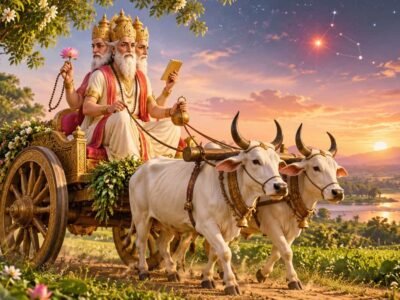
Uttara Ashadha Nakshatra (also written Uttarashada or Uttara Shadha) is the 21st of the 27 Nakshatras in Vedic astrology. It spans 26°40′ Sagittarius (Dhanu Rashi) to 10°00′ Capricorn (Makara Rashi). Its ruling planet in the Vimshottari Dasha system is the Sun (Surya), its presiding deities are the Vishvadevas, and its principal symbol is an elephant’s tusk. Some traditions also associate it with the planks or small bed.
The name Uttara Ashadha is commonly interpreted as “the latter invincible one” or “the later unconquered.” In traditional Jyotish, it is associated with lasting achievement, responsibility, integrity, patience and work whose value continues over time. Unlike a victory that depends only on a quick burst of enthusiasm, its symbolism emphasises results sustained through discipline and principled action.
People whose Moon is placed in Uttara Ashadha may be described in traditional astrology as dependable, purposeful and committed to their responsibilities. These are cultural and symbolic interpretations, not scientifically established personality facts. A Nakshatra alone cannot determine someone’s character, career, relationships or future; the wider birth chart and real-life circumstances are important in any astrological reading.
KEY POINTS
- Uttara Ashadha is the 21st Nakshatra and spans 26°40′ Sagittarius to 10°00′ Capricorn.
- Its Vimshottari Dasha lord is the Sun (Surya); Jupiter rules Sagittarius and Saturn rules Capricorn.
- Its presiding deities are the Vishvadevas, a group of universal deities; the principal symbol is an elephant’s tusk.
- Traditional themes include enduring success, integrity, responsibility, patience and keeping commitments.
Key Facts About Uttara Ashadha Nakshatra
| Attribute | Details |
|---|---|
| Nakshatra number | 21st of the 27 Nakshatras |
| Sanskrit name | Uttara Ashadha (उत्तराषाढा) |
| Other spellings | Uttarashada, Uttara Shadha; regional forms include Uthradam and Uthiradam |
| Zodiac signs | Sagittarius (Dhanu) and Capricorn (Makara) |
| Zodiac range | 26°40′ Sagittarius – 10°00′ Capricorn |
| Nakshatra lord | Sun (Surya) |
| Sagittarius sign lord | Jupiter (Guru) |
| Capricorn sign lord | Saturn (Shani) |
| Presiding deities | Vishvadevas (the universal deities) |
| Principal symbol | Elephant’s tusk; some traditions also list bed planks or a small bed |
| Gana | Manushya Gana |
| Yoni | Mongoose, in traditional compatibility classification |
| Nadi | Antya Nadi |
| Pada 1 syllable | Bhe (भे) |
| Pada 2 syllable | Bho (भो) |
| Pada 3 syllable | Ja (जा) |
| Pada 4 syllable | Ji (जी) |
| Navamsa signs | Sagittarius, Capricorn, Aquarius and Pisces |
| Traditional Muhurta category | Dhruva or Sthira (fixed/stable) |
| Traditional themes | Enduring achievement, duty, integrity and lasting results |
Gana, yoni, nadi and Muhurta categories are traditional Jyotish classifications, often used in compatibility or electional astrology. They are not scientific measurements of a person’s character or a guarantee of an event’s outcome. Specific naming syllables and transliterations may vary slightly by regional convention.
What Does Uttara Ashadha Nakshatra Mean?
The Sanskrit name is generally understood through uttara, meaning later, subsequent or further, and ashadha, associated with being unconquered or invincible. Together, the name is often translated as “the latter invincible one.” This is a symbolic description of durable achievement, not a promise that every person with this placement will always win or avoid setbacks.
Uttara Ashadha follows Purva Ashadha in the zodiac sequence. In broad traditional interpretation, Purva Ashadha can represent the drive to assert a conviction, while Uttara Ashadha emphasises consolidating effort, accepting responsibility and sustaining a result. This contrast is a way of explaining the symbolism rather than a strict rule that applies to every chart.
Three broad themes are commonly linked with Uttara Ashadha:
CORE THEMES OF UTTARA ASHADHA
- ✓ Lasting achievement: Working towards outcomes that remain useful beyond an immediate success.
- ✓ Integrity and responsibility: Keeping commitments, acting consistently and accepting accountability.
- ✓ Patient leadership: Building trust through reliable actions instead of relying only on status or strong words.
The Nakshatra crosses from Sagittarius into Capricorn. Sagittarius is traditionally linked with learning, principles, exploration and broad goals; Capricorn is associated with structure, discipline, organisation and practical responsibility. Because the Nakshatra spans both signs, its conventional interpretation includes both ideal and implementation: knowing what matters and steadily doing the work required to support it.
The Symbols of Uttara Ashadha Nakshatra
The Elephant’s Tusk
The elephant’s tusk is the principal symbol widely associated with Uttara Ashadha. In traditional symbolic readings, an elephant can suggest strength, dignity, memory and steadiness, while the tusk may represent firm resolve and the ability to hold a line. The image is not a literal prediction of a person’s nature; it is a traditional metaphor used to interpret the Nakshatra.
A tusk can also remind readers that strength comes with responsibility. Determination is most useful when guided by judgement and restraint. The balanced side of this symbolism is courage supported by an awareness of consequences, rather than stubbornness or the need to dominate others.
The Planks of a Bed
Some Jyotish sources also list the planks of a bed or a small bed as a symbol of Uttara Ashadha. A bed is a structure made to support a person, and its planks work together to create stability. Read symbolically, this image fits themes of reliability, support, shared responsibility and the foundations that allow something to last.
The elephant’s tusk and the bed symbol emphasise complementary ideas: resolve to pursue a purpose and the steady structure needed to sustain it. This can be understood as an invitation to pair ambition with dependable systems, clear agreements and consistent follow-through.
Who Are the Vishvadevas?
Uttara Ashadha is presided over by the Vishvadevas, often described as the “all-gods” or universal deities. Rather than referring to a single deity, the name points to a collective group in Vedic tradition. Lists of the Vishvadevas and their precise descriptions can vary between texts and ritual traditions, so it is safer not to treat one list as universal.
Their collective association contributes to Uttara Ashadha’s themes of shared principles, social order, cooperation and values intended to benefit more than one individual. Within a traditional interpretation, this Nakshatra’s idea of victory is not only personal success; it can also involve fulfilling a duty or contributing to a wider goal.
SYMBOLIC EXPRESSIONS OF THE VISHVADEVAS
- ✓ Respect for principles that apply beyond personal convenience.
- ✓ Cooperation among people who share a meaningful goal.
- ✓ Responsibility towards a family, community or organisation.
- ✓ A preference for reliable conduct over temporary appearances.
- ✓ A reminder that leadership carries obligations as well as recognition.
These are symbolic associations within Vedic astrology, not guaranteed qualities of everyone born under Uttara Ashadha. Different schools may interpret the Vishvadevas’ role and mythology with different emphases.
The Sun: Ruling Planet of Uttara Ashadha Nakshatra
The Sun (Surya) is the ruling planet of Uttara Ashadha in the Vimshottari Dasha system. However, the Nakshatra crosses two zodiac signs: Jupiter rules the Sagittarius portion, while Saturn rules the Capricorn portion. These roles should not be confused. The Sun is the Nakshatra’s Dasha lord; Jupiter and Saturn are the respective sign lords.
In traditional Jyotish, the Sun is associated with vitality, visibility, authority, leadership, identity, accountability and the relationship with established institutions. Combined with Uttara Ashadha’s themes of duty and lasting achievement, it is often interpreted as a desire to be trusted, to act with principle or to earn respect through dependable work.
The Sagittarius section can add a symbolic emphasis on ideals, learning and wider purpose. The Capricorn section can add structure, patience, hierarchy and long-term planning. This is a broad interpretive distinction; the actual reading depends on the Moon’s exact placement, the Sun’s condition, the houses involved, aspects and planetary periods in the full chart.
Challenges can also be described within this symbolism. Commitment may become excessive rigidity, responsibility may turn into overwork, and the desire to be respected may become sensitivity to criticism. A balanced reading values humility, flexibility and the ability to share responsibility instead of trying to carry everything alone.
Uttara Ashadha Nakshatra Personality Traits
Uttara Ashadha is traditionally associated with conscientiousness, patience, a sense of duty and an interest in work that produces lasting value. A person whose Moon or another important placement falls here may be described by an astrologer as steady, principled or motivated by commitments that extend beyond immediate rewards.
Such descriptions are general astrological interpretations, not a scientific personality assessment. People with the same Nakshatra placement can behave differently because of upbringing, choices, opportunities, personal experiences and the rest of the horoscope.
STRENGTHS
- ✓ Reliability and consistency
- ✓ Patience with long-term projects
- ✓ Strong sense of responsibility
- ✓ Commitment to personal principles
- ✓ Respect for promises and agreements
- ✓ Ability to organise complex work
- ✓ Persistence after setbacks
- ✓ Careful planning and follow-through
- ✓ Leadership through example
- ✓ Fairness in shared responsibilities
- ✓ Interest in meaningful achievement
- ✓ Ability to build trust over time
- ✓ Willingness to accept accountability
- ✓ Practical judgement
- ✓ Loyalty to a team or community
- ✓ Steady effort rather than quick display
- ✓ Respect for experience and learning
- ✓ Capacity to work towards distant goals
- ✓ Composure under sustained pressure
- ✓ Desire to leave something useful behind
- ✓ Dependability during difficult periods
- ✓ Preference for clear standards
POTENTIAL CHALLENGES
- ✕ Rigidity when plans need to change
- ✕ Taking on too many responsibilities
- ✕ Difficulty delegating work
- ✕ Being overly self-critical
- ✕ Expecting others to follow the same standards
- ✕ Impatience with careless or inconsistent behaviour
- ✕ Protecting reputation at the expense of openness
- ✕ Reluctance to ask for help
- ✕ Becoming overly serious about minor matters
- ✕ Slowly adapting to new methods
- ✕ Turning duty into excessive work
- ✕ Sensitivity to public criticism
- ✕ Staying with a plan after it has stopped working
- ✕ Underestimating the need for rest
- ✕ Confusing control with responsibility
The Four Padas of Uttara Ashadha Nakshatra
Uttara Ashadha is divided into four padas, or quarters. Each pada covers 3°20′ of the zodiac and corresponds to a Navamsa sign. The first pada lies in Sagittarius, while the second, third and fourth padas lie in Capricorn. This sign boundary is important when interpreting the Nakshatra: the Sun remains its Nakshatra lord, but the sign lord changes from Jupiter to Saturn after the first pada.
The traditional naming syllables are Bhe, Bho, Ja and Ji. The Moon’s exact sidereal longitude is needed to identify a birth pada accurately; a birth date alone may not be enough without time, place and the ayanamsha or calculation system being used.
Uttara Ashadha Nakshatra Pada 1
Degree range: 26°40′–30°00′ Sagittarius
Navamsa sign: Sagittarius
Navamsa ruler: Jupiter
Traditional naming syllable: Bhe (भे)
Purushartha association: Dharma
The first pada lies in Sagittarius in both the main zodiac chart and Navamsa. This double Sagittarius association is traditionally interpreted through themes of principles, learning, teaching, exploration and purpose. It can symbolise someone who wants their work to stand for something meaningful and who measures success partly by whether it aligns with personal beliefs.
The useful side of this symbolism is conviction joined with a willingness to learn. The potential challenge is becoming overly attached to one’s own philosophy or assuming that a sincere belief must be correct. Listening to evidence and considering other perspectives can help keep purpose from becoming dogmatism.
Uttara Ashadha Nakshatra Pada 2
Degree range: 0°00′–3°20′ Capricorn
Navamsa sign: Capricorn
Navamsa ruler: Saturn
Traditional naming syllable: Bho (भो)
Purushartha association: Artha
The second pada falls in Capricorn in both the Rashi chart and Navamsa. Capricorn is traditionally associated with structure, discipline, planning, status and practical responsibility. In this pada, Uttara Ashadha’s symbolism of enduring achievement is often interpreted as especially focused on building something that can withstand time and pressure.
This can symbolically favour measured progress, organisation and patience with gradual results. A possible challenge is placing so much importance on performance, duty or achievement that rest, emotional needs and flexibility receive too little attention.
Uttara Ashadha Nakshatra Pada 3
Degree range: 3°20′–6°40′ Capricorn
Navamsa sign: Aquarius
Navamsa ruler: Saturn
Traditional naming syllable: Ja (जा)
Purushartha association: Kama
The third pada falls in Aquarius Navamsa, traditionally ruled by Saturn. Aquarius adds themes of groups, systems, wider society, ideas and reform to the disciplined qualities of Uttara Ashadha. Its symbolism can be interpreted as an interest in improving institutions, organising teamwork or pursuing an objective that has value for a community.
The strength of this combination is the ability to connect structure with a wider purpose. The challenge may be becoming inflexible about systems or prioritising an ideal over the needs of particular people. Practical empathy is important when pursuing collective goals.
Uttara Ashadha Nakshatra Pada 4
Degree range: 6°40′–10°00′ Capricorn
Navamsa sign: Pisces
Navamsa ruler: Jupiter
Traditional naming syllable: Ji (जी)
Purushartha association: Moksha
The fourth pada falls in Pisces Navamsa, traditionally ruled by Jupiter. Pisces is associated with compassion, imagination, reflection and spiritual meaning. In traditional interpretation, this pada can soften Uttara Ashadha’s practical and duty-focused themes with a concern for service, values and the wider human meaning of achievement.
Its potential strength is combining responsibility with empathy. A possible challenge is taking on others’ burdens without clear limits or allowing an idealistic vision to overshadow practical details. Good boundaries and realistic planning help balance the symbolism.
Uttara Ashadha Padas at a Glance
| Pada | Main zodiac range | Navamsa | Ruler | Syllable | Traditional emphasis |
|---|---|---|---|---|---|
| 1 | 26°40′–30°00′ Sagittarius | Sagittarius | Jupiter | Bhe | Principles and purposeful action |
| 2 | 0°00′–3°20′ Capricorn | Capricorn | Saturn | Bho | Structure and long-term effort |
| 3 | 3°20′–6°40′ Capricorn | Aquarius | Saturn | Ja | Systems and collective aims |
| 4 | 6°40′–10°00′ Capricorn | Pisces | Jupiter | Ji | Compassion and broader meaning |
The Purushartha labels—Dharma, Artha, Kama and Moksha—are commonly associated with the four Navamsa signs in this sequence. This is a traditional interpretive mapping, not a scientific classification and not a universal rule applied identically by every Jyotish school.
Uttara Ashadha Nakshatra Career and Professional Life
Traditional career interpretations of Uttara Ashadha often focus on consistency, responsibility, planning and work whose results develop over time. The symbolism may be associated with positions where reliability matters, where rules and standards must be applied fairly, or where a person is expected to maintain a project or organisation rather than simply launch it.
CAREER DOMAINS SOMETIMES ASSOCIATED WITH UTTARA ASHADHA
- ✓ Administration and management: Organising teams, processes, schedules and long-term responsibilities.
- ✓ Public service and institutions: Roles that rely on accountability, continuity and service standards.
- ✓ Law, policy and governance: Work requiring careful interpretation of rules and a sense of responsibility.
- ✓ Education and mentoring: Sharing knowledge, developing skills and supporting steady progress.
- ✓ Engineering and project delivery: Planning, quality control and building systems that need to remain dependable.
- ✓ Business and operations: Maintaining standards, managing resources and developing sustainable practices.
These are traditional associations rather than career predictions. Aptitude, training, practical experience, health, access to opportunities and personal preferences are much more useful in real-world career decisions than a Nakshatra alone.
Uttara Ashadha Nakshatra in Love and Relationships
In traditional astrological interpretation, Uttara Ashadha is associated with reliability, commitment and taking promises seriously. Its symbolism can describe a relationship style that values trust built over time, clear expectations and practical support rather than affection expressed only through words.
A person who identifies with these themes may show care by following through on commitments, sharing responsibilities or helping plan for the future. Stability does not mean that every relationship will be easy or that a Nakshatra guarantees loyalty; relationships depend on communication, respect, compatibility and choices made by both people.
The same sense of duty can create pressure if it turns into inflexibility, emotional reserve or an assumption that there is only one correct way to handle a problem. Listening, expressing feelings openly and allowing room for differences can help make commitment more supportive than restrictive.
RELATIONSHIP TIPS INSPIRED BY UTTARA ASHADHA SYMBOLISM
- Make expectations and shared responsibilities explicit rather than assuming that both people see them the same way.
- Keep promises realistic and communicate early when circumstances change.
- Make space for emotional conversation, not only practical problem-solving.
- Treat disagreements as opportunities to understand different perspectives, not as tests of loyalty.
Uttara Ashadha Nakshatra and Family Life
Uttara Ashadha’s traditional emphasis on duty and reliability may be interpreted as a desire to support family members and maintain a stable home environment. The symbolism often highlights keeping one’s word, planning ahead and taking responsibility when practical help is needed.
However, being dependable does not require carrying every burden alone. Healthy family life also depends on shared effort, flexibility, emotional warmth and the ability to ask for assistance. A person may need to balance long-term responsibilities with rest and genuine connection.
The four padas add different symbolic shades—from the values and beliefs associated with Sagittarius to the structures of Capricorn, the collective themes of Aquarius and the compassionate tone of Pisces Navamsa. None of these associations guarantees a particular family experience.
Uttara Ashadha Nakshatra and Traditional Muhurta
In traditional Muhurta astrology, Uttara Ashadha is commonly classified as Dhruva or Sthira, meaning fixed or stable. Fixed Nakshatras are often considered suitable, within the relevant astrological framework, for activities intended to endure, such as laying foundations, establishing long-term arrangements or beginning work that requires continuity.
This classification is only one element in Muhurta selection. A traditional electional chart may also consider the weekday, lunar day (tithi), Moon’s condition, yoga, karana, the ascendant and other factors. Different traditions may use different rules, and an auspicious label should not be treated as a guarantee of success.
Uttara Ashadha should not be assumed suitable for every undertaking simply because it is called fixed. The type of activity and the complete Panchang or Muhurta framework matter to those who follow electional astrology.
How to Interpret Uttara Ashadha in a Birth Chart
A useful traditional reading begins by identifying which planet occupies Uttara Ashadha. The Moon’s Nakshatra is especially important in many Jyotish traditions because it determines the Janma Nakshatra and the starting balance of the Vimshottari Dasha sequence. If another planet occupies the Nakshatra, an astrologer may interpret that planet through the Nakshatra’s symbolism as well.
Next, identify the pada. The first pada is in Sagittarius and Sagittarius Navamsa. The remaining three padas are in Capricorn, with Capricorn, Aquarius and Pisces Navamsas respectively. This means that the sign ruler differs across the Nakshatra: Jupiter rules the Sagittarius portion and Saturn rules the Capricorn portion, while the Nakshatra’s Vimshottari lord remains the Sun throughout.
Finally, examine the relevant houses, planetary condition, aspects, conjunctions and Dasha periods. Two people with the Moon in Uttara Ashadha can have very different circumstances and temperaments. Traditional interpretation should be considered in context instead of being used as a stand-alone judgement.
Astrology is a traditional interpretive system, not a scientifically established method for predicting an individual’s personality or future. Its descriptions are best approached as cultural and symbolic interpretations rather than certain outcomes.
Frequently Asked Questions About Uttara Ashadha Nakshatra
FAQs
What is Uttara Ashadha Nakshatra?
Uttara Ashadha is the 21st of the 27 Nakshatras in Vedic astrology. It spans 26°40′ Sagittarius to 10°00′ Capricorn and is traditionally linked with lasting achievement, integrity and responsibility.
Which planet rules Uttara Ashadha Nakshatra?
The Sun (Surya) is the Nakshatra lord in the Vimshottari Dasha system. Jupiter rules the Sagittarius section, while Saturn rules the Capricorn section.
Who are the deities of Uttara Ashadha?
Its presiding deities are the Vishvadevas, a collective group often described as the universal deities. Details and lists associated with the group can vary among Vedic texts and traditions.
What is the main symbol of Uttara Ashadha?
The principal symbol is an elephant’s tusk. Some traditional sources also associate the Nakshatra with the planks of a bed or a small bed.
What are the four padas of Uttara Ashadha?
Pada 1 is 26°40′–30° Sagittarius (Bhe); Pada 2 is 0°–3°20′ Capricorn (Bho); Pada 3 is 3°20′–6°40′ Capricorn (Ja); and Pada 4 is 6°40′–10° Capricorn (Ji).
Which Navamsa signs belong to the four padas?
The Navamsa signs are Sagittarius, Capricorn, Aquarius and Pisces, in order from the first to the fourth pada.
What are the naming syllables for Uttara Ashadha?
The traditional starting syllables are Bhe, Bho, Ja and Ji, corresponding to padas 1 through 4. Regional transliteration may vary slightly.
Is Uttara Ashadha considered auspicious in Muhurta?
It is commonly classified as Dhruva or Sthira (fixed), a category traditionally associated with stable or long-term undertakings. The suitability of a particular time depends on the activity and the full Muhurta chart.
What are the traditional Gana, Yoni and Nadi of Uttara Ashadha?
Commonly listed classifications are Manushya Gana, Mongoose Yoni and Antya Nadi. These belong to traditional Jyotish systems and are not scientific assessments of compatibility or personality.
Does Uttara Ashadha guarantee success or leadership?
No. Traditional astrology associates it with endurance, duty and lasting achievement, but a Nakshatra cannot guarantee success, leadership, wealth or any life outcome.
Is Uttara Ashadha the same as Uttarashada?
Yes. Uttarashada and Uttara Shadha are common spelling variants of Uttara Ashadha; regional names also include Uthradam and Uthiradam.
Uttara Ashadha occupies an important place in the traditional sequence of 27 Nakshatras. Its elephant-tusk symbol, association with the Vishvadevas and rulership by the Sun contribute to a set of themes centred on integrity, responsibility, patience and durable accomplishment.
Its four padas cover Sagittarius and Capricorn in the main zodiac chart and Sagittarius, Capricorn, Aquarius and Pisces in Navamsa. These distinctions help explain how traditional Jyotish adds layers to an interpretation, but they do not produce a fixed description of every individual.
A balanced way to approach Uttara Ashadha is to see its symbolism as a reminder that meaningful achievement usually requires more than ambition: it also needs consistent work, accountability, flexibility and respect for others.
Disclaimer: This article discusses traditional Vedic astrological concepts for educational and cultural purposes. Astrological personality descriptions and predictions are not scientifically established facts and should not be treated as definitive assessments or guarantees for any individual.