
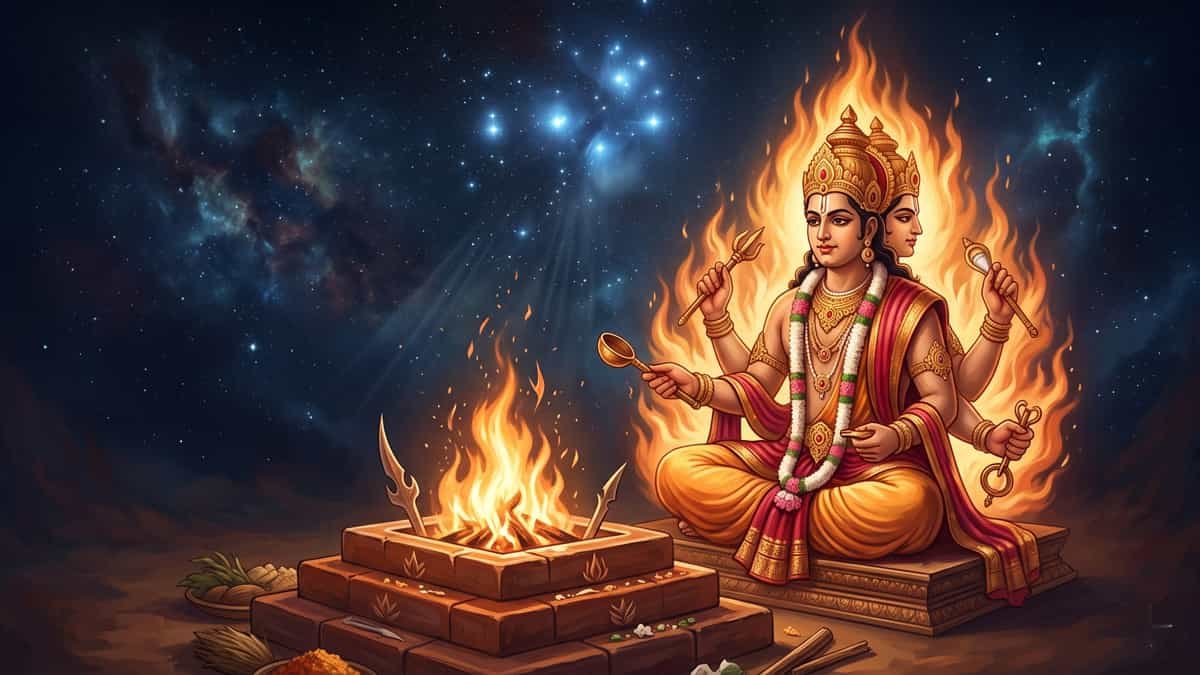
Krittika Nakshatra is the third of the 27 Nakshatras in Vedic astrology. It spans 13°20′ of the sidereal zodiac, from 26°40′ Aries (Mesha Rashi) to 10°00′ Taurus (Vrishabha Rashi). Its ruling planet in the Vimshottari Dasha system is the Sun, its presiding deity is Agni, and its principal symbols are a razor or blade and a flame.
In traditional Vedic astrology, Krittika represents discernment, purification, courage, clarity and the ability to separate what is useful from what is not. Fire is central to its symbolism: it can illuminate, cook and transform, but it can also burn when it is not handled carefully. Krittika is therefore associated with both sharp judgement and the responsibility to use that sharpness wisely.
People whose Moon is placed in Krittika are traditionally interpreted as determined, direct and focused on standards, truth or improvement. However, the exact interpretation depends on the whole birth chart, including planetary placements, houses, aspects and planetary periods. A Nakshatra alone cannot determine a person’s personality or future.
KEY POINTS
- Third of the 27 Nakshatras, spanning 26°40′ Aries to 10°00′ Taurus.
- Ruled by the Sun in the Vimshottari Dasha system; the Sun Mahadasha lasts six years.
- Presiding deity is Agni, the Vedic deity associated with fire and sacred offerings.
- Main symbols are a blade or razor and a flame, representing discernment and transformation.
- The four padas fall in Sagittarius, Capricorn, Aquarius and Pisces Navamsas.
Key Facts About Krittika Nakshatra
| Attribute | Details |
|---|---|
| Nakshatra number | 3rd of the 27 Nakshatras |
| Sanskrit name | Krittika (कृत्तिका) |
| Zodiac signs | Aries (Mesha) and Taurus (Vrishabha) |
| Zodiac range | 26°40′ Aries to 10°00′ Taurus |
| Nakshatra lord | Sun (Surya) |
| Sign lords | Mars for the Aries portion; Venus for the Taurus portion |
| Presiding deity | Agni, the Vedic deity associated with fire |
| Main symbols | Razor, blade or flame |
| Gana | Rakshasa Gana in traditional Jyotish classifications |
| Yoni | Sheep (Mesha Yoni in traditional matching tables) |
| Nadi | Antya Nadi |
| Pada 1 syllable | A (अ) |
| Pada 2 syllable | Ee / I (ई) |
| Pada 3 syllable | U (उ) |
| Pada 4 syllable | E (ए) |
| Navamsa signs | Sagittarius, Capricorn, Aquarius and Pisces |
| Traditional Muhurta nature | Mishra or Sadharana (mixed/ordinary) in common classifications |
| Traditional themes | Discernment, purification, discipline, truth and transformation |
Gana, yoni, nadi and Muhurta categories are traditional Jyotish classifications. They are not scientific descriptions of a person’s character, and wording or application can vary between traditions.
What Does Krittika Nakshatra Mean?
The name Krittika is traditionally associated with the idea of cutting. Its blade symbol represents the ability to distinguish, trim away excess or make a clear separation. The flame adds another layer: fire can remove impurities, prepare food, provide warmth and turn raw material into something useful.
Krittika is the first Nakshatra to cross a zodiac-sign boundary. Its first pada lies in the final 3°20′ of Aries, while the other three padas lie in Taurus. This means Krittika combines the action-oriented symbolism associated with Aries in its first quarter with the steadier, practical symbolism associated with Taurus in the remaining quarters.
Krittika is commonly associated with three broad themes:
CORE THEMES OF KRITTIKA
- ✓ Discernment and clarity: Looking closely at a situation, identifying what matters and making distinctions.
- ✓ Purification and refinement: Improving a process, correcting mistakes or removing what no longer serves a purpose.
- ✓ Heat, courage and transformation: Bringing energy to difficult tasks and using pressure constructively rather than destructively.
In traditional Muhurta astrology, Krittika is commonly placed in the Mishra or Sadharana group, often translated as mixed or ordinary. Classical classifications associate this group with certain practical and fire-related activities. This is a category used in electional astrology; it does not mean that a person born under Krittika has a mixed or inferior character.
The Symbols of Krittika Nakshatra: The Blade and the Flame
The blade or razor is one of the principal symbols of Krittika Nakshatra. It represents precision, the ability to cut through confusion and the willingness to make a necessary distinction. In a constructive interpretation, this symbolism is associated with clear standards, careful analysis and the courage to address a problem directly.
The flame is the other widely used symbol. In Vedic tradition, fire is connected with light, offerings, cooking, warmth and transformation. It can make something ready for use, but it also requires control. The same symbolism therefore points to both constructive energy and the need for restraint.
A blade can be useful when handled carefully, while harsh words or overly severe judgement can cause harm. Likewise, fire can transform raw materials, but uncontrolled heat can destroy what it touches. Krittika’s symbolism encourages clarity with compassion and strong standards with sound judgement.
For this reason, traditional interpretations of Krittika often emphasise not only the ability to identify flaws, but also the responsibility to improve matters without becoming needlessly critical or severe.
Who Is Agni, the Deity of Krittika Nakshatra?
Agni is the Vedic deity associated with fire. In Vedic ritual, Agni has an important role as the sacred fire that receives offerings and carries them to the gods. Agni is also associated with light, heat, energy and the transformative role of fire in everyday and ritual life.
Agni’s association with Krittika helps explain why this Nakshatra is traditionally connected with purification, intensity, courage and refinement. Fire can reveal what is hidden by bringing light to a dark space; it can also change a substance by heating it. These ideas become metaphors for examining a situation, correcting a weakness and turning experience into useful knowledge.
SYMBOLIC EXPRESSIONS OF AGNI
- ✓ Bringing clarity to confusing or difficult situations.
- ✓ Using discipline and effort to improve the quality of work.
- ✓ Protecting people or principles considered important.
- ✓ Transforming raw ideas or materials into something useful.
- ✓ Learning to handle strong emotions and power responsibly.
These are symbolic associations within Vedic tradition, not guaranteed characteristics of everyone born under Krittika. Fire is not only a symbol of intensity; it also represents the care and discipline needed to maintain a steady flame.
Krittika Nakshatra and the Pleiades
Krittika is traditionally associated with the Pleiades, a well-known star cluster visible in the night sky. In Indian astronomical and mythological traditions, the stars of the Pleiades are linked with the Krittikas. The star cluster and the 13°20′ Nakshatra segment used in a horoscope are related by tradition, but they are not the same kind of object: one is a group of stars in the sky, and the other is a defined section of the sidereal zodiac.
Some Hindu stories describe the Krittikas as six celestial mothers who nurtured Kartikeya, also known as Skanda or Murugan. Accounts of Kartikeya’s birth and upbringing vary among texts and regional traditions, so the details of the story are not identical everywhere.
The story adds a nurturing side to Krittika’s symbolism. Alongside the blade and the fire, the Krittikas can represent care, protection and the strength required to raise or support someone. It is a reminder that firmness and warmth can exist together.
The Sun: The Ruling Planet of Krittika Nakshatra
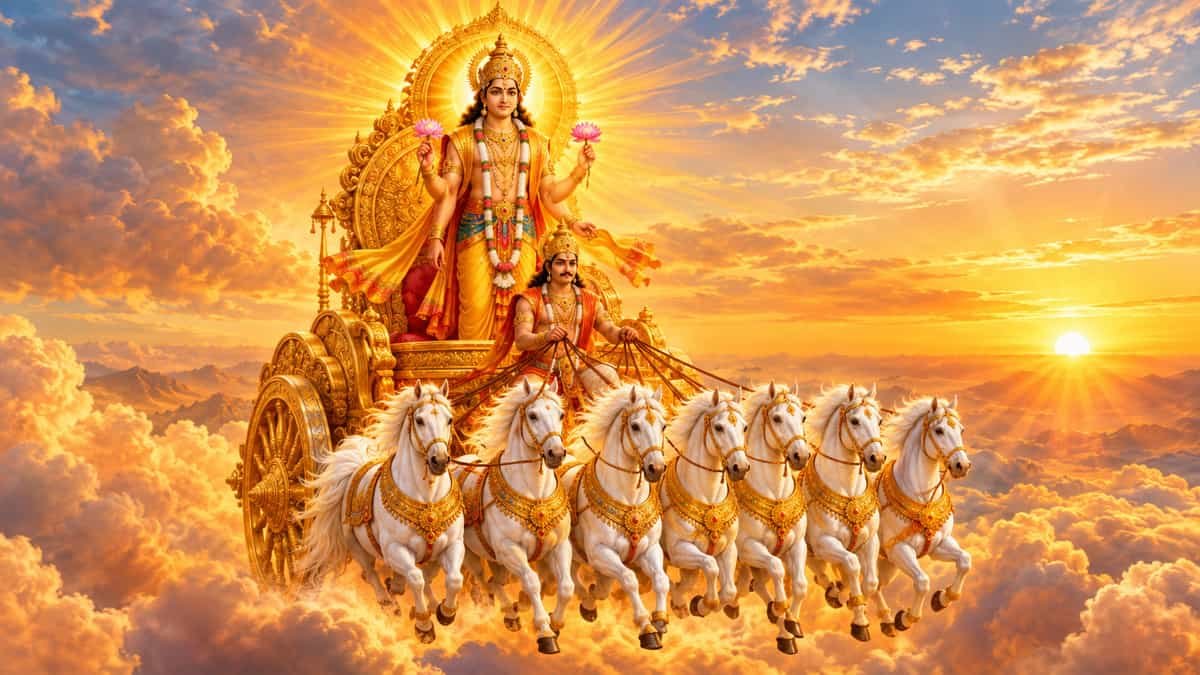
The Sun is the planetary ruler of Krittika Nakshatra in the Vimshottari Dasha system. The Sun Mahadasha lasts six years. Krittika also crosses two zodiac signs, so the sign lord changes within the Nakshatra: Mars rules the Aries portion, while Venus rules the Taurus portion. The Nakshatra lord and the sign lord are different astrological roles and should not be confused.
In traditional Jyotish, the Sun is associated with vitality, authority, identity, confidence, responsibility and visibility. Mars, which rules the Aries section, is associated with initiative, courage and action. Venus, which rules the Taurus section, is associated with comfort, resources, values, beauty and material stability.
A traditional interpretation may therefore combine the Sun’s emphasis on clarity and self-respect with the sharper action of Mars in the first pada, or with the practical and resource-oriented themes of Venus in the other three padas. These are symbolic interpretations rather than fixed outcomes.
The same symbolism can suggest challenges. Confidence may become pride, directness may turn into harsh criticism, and a desire for high standards may become perfectionism. Learning when to be firm and when to be flexible is one way to use Krittika’s traditional symbolism constructively.
The actual expression of the Sun, Mars and Venus depends on their placement, dignity, aspects and relationships in the complete birth chart.
Krittika Nakshatra Personality Traits
Krittika is traditionally associated with determination, clear judgement and a willingness to confront problems. Its blade and fire symbols are often used to describe a temperament that values honesty, quality and direct action rather than leaving an issue unresolved.
People with an important Krittika placement may be interpreted as observant, ambitious or protective. They may prefer clear expectations and may feel strongly about doing work properly. The nurturing side of the Krittika stories also gives this Nakshatra a protective dimension, especially when someone or something they value needs support.
The same qualities can have a difficult expression. A strong eye for flaws may become excessive criticism, confidence may become stubbornness, and urgency may lead to sharp words. The following descriptions are common astrological interpretations, not a personality assessment that applies to every individual.
STRENGTHS
- ✓ Clear judgement and attention to quality
- ✓ Courage in difficult situations
- ✓ Determination and persistence
- ✓ Direct, honest communication
- ✓ Strong sense of responsibility
- ✓ Protective attitude towards loved ones
- ✓ Ability to identify errors and improve systems
- ✓ Practical focus and willingness to work hard
WEAKNESSES
- ✕ Harsh criticism or overly blunt speech
- ✕ Impatience with mistakes or delays
- ✕ Pride or difficulty accepting feedback
- ✕ Perfectionism that slows progress
- ✕ Stubbornness when opinions differ
- ✕ Quick anger under pressure
- ✕ Being overly controlling or demanding
- ✕ Difficulty relaxing when standards are not met
The Four Padas of Krittika Nakshatra
Krittika Nakshatra is divided into four padas, or quarters. Each pada covers 3°20′ of the zodiac and corresponds to one Navamsa sign. Unlike Ashwini and Bharani, Krittika crosses the boundary between Aries and Taurus: Pada 1 lies in Aries, while Padas 2, 3 and 4 lie in Taurus.
The Navamsa signs for Krittika are Sagittarius, Capricorn, Aquarius and Pisces. In traditional interpretation, each sign adds another symbolic layer to Krittika’s themes of fire, discernment and refinement. The naming syllables commonly used for the four padas are A, Ee, U and E; transliteration can vary slightly across regional naming traditions.
Krittika Nakshatra Pada 1
Degree range: 26°40′–30°00′ Aries
Navamsa sign: Sagittarius
Navamsa ruler: Jupiter
Traditional naming syllable: A (अ)
Purushartha association: Dharma
The first pada is the only Krittika quarter located in Aries. Its sign lord is Mars, while its Navamsa falls in Sagittarius, ruled by Jupiter. Traditional interpretations often connect this combination with conviction, initiative, directness and a desire to act according to personal principles.
This pada may symbolise a person who wants to understand the larger meaning of a task and then move decisively. It can be associated with leadership, learning, teaching or a strong sense of purpose, depending on the wider chart.
The challenge is that conviction can become self-righteousness, and direct speech can sound harsher than intended. Listening to evidence, accepting that others may hold valid views and checking facts before making judgements can help balance this pada’s symbolism.
Krittika Nakshatra Pada 2
Degree range: 0°00′–3°20′ Taurus
Navamsa sign: Capricorn
Navamsa ruler: Saturn
Traditional naming syllable: Ee / I (ई)
Purushartha association: Artha
The second pada falls in Taurus in the main zodiac chart and Capricorn Navamsa. Taurus is ruled by Venus, while Capricorn is ruled by Saturn. In traditional interpretation, this combination emphasises practicality, persistence, structure and the value of steady effort.
Its symbolism may favour building something durable, maintaining standards and turning a strong idea into a measurable result. Rather than relying only on inspiration, this pada is often described through patience, organisation and an interest in tangible outcomes.
A possible challenge is becoming too rigid or placing so much emphasis on work and results that enjoyment and rest are neglected. Flexibility and the ability to revise a plan can make discipline more effective.
Krittika Nakshatra Pada 3
Degree range: 3°20′–6°40′ Taurus
Navamsa sign: Aquarius
Navamsa ruler: Saturn
Traditional naming syllable: U (उ)
Purushartha association: Kama
The third pada falls in Taurus and Aquarius Navamsa. Taurus brings traditional themes of stability and resources, while Aquarius is associated with systems, ideas, independence and collective concerns. Saturn rules the Navamsa sign, adding themes of structure and long-term thinking.
This combination is often interpreted as a practical but independent approach. Its symbolism may express itself through improving systems, finding a more efficient method or applying original ideas to real-world needs. It can also indicate a preference for principles and fairness over simply following convention.
The possible difficulty is becoming fixed in one’s opinions or appearing emotionally distant while concentrating on a problem. Explaining the reasons behind decisions and considering the personal effect of change can help balance this pada.
Krittika Nakshatra Pada 4
Degree range: 6°40′–10°00′ Taurus
Navamsa sign: Pisces
Navamsa ruler: Jupiter
Traditional naming syllable: E (ए)
Purushartha association: Moksha
The fourth pada falls in Taurus and Pisces Navamsa. Venus rules Taurus, while Jupiter rules Pisces. Traditional interpretations often combine Taurus’s practical and sensory themes with Pisces’s imagination, compassion and spiritual associations.
This pada may symbolise a gentle or creative way of applying Krittika’s refining impulse. Its expression can involve helping others, improving a living environment, making something beautiful or finding meaning in practical work.
A possible challenge is struggling between practical concerns and idealistic expectations. Clear boundaries and realistic planning can help translate compassion or creativity into steady action.
Krittika Padas at a Glance
| Pada | Zodiac degree range | Navamsa | Navamsa ruler | Syllable | Traditional emphasis |
|---|---|---|---|---|---|
| Pada | Zodiac degree range | Navamsa | Navamsa ruler | Syllable | Traditional emphasis |
| 1 | 26°40′–30°00′ Aries | Sagittarius | Jupiter | A (अ) | Conviction, initiative and purpose |
| 2 | 0°00′–3°20′ Taurus | Capricorn | Saturn | Ee / I (ई) | Discipline and practical results |
| 3 | 3°20′–6°40′ Taurus | Aquarius | Saturn | U (उ) | Independent thinking and systems |
| 4 | 6°40′–10°00′ Taurus | Pisces | Jupiter | E (ए) | Creativity, compassion and meaning |
The Purushartha associations—Dharma, Artha, Kama and Moksha—refer to four traditional aims of life. They are commonly mapped to the four Navamsa signs in this pada sequence. These mappings are used within Jyotish interpretation and are not scientific measures of a person’s goals or behaviour.
25 POSITIVE TRAITS OF KRITTIKA NAKSHATRA
- ✓ 1. Discernment: Noticing important differences and recognising what needs attention.
- ✓ 2. Honesty: Valuing truthful communication and clear expectations.
- ✓ 3. Courage: Facing difficult situations rather than avoiding every uncomfortable issue.
- ✓ 4. Determination: Continuing to work towards a goal despite obstacles.
- ✓ 5. Clarity: Trying to define a problem before choosing a response.
- ✓ 6. Responsibility: Taking duties and commitments seriously.
- ✓ 7. High standards: Caring about quality and doing work carefully.
- ✓ 8. Practical judgement: Looking for usable solutions rather than remaining in theory.
- ✓ 9. Persistence: Staying with demanding work when it remains worthwhile.
- ✓ 10. Protective instinct: Supporting people or principles considered important.
- ✓ 11. Leadership: Being willing to make a decision when a situation needs direction.
- ✓ 12. Self-discipline: Working to maintain routines, standards or personal commitments.
- ✓ 13. Analytical thinking: Breaking a complicated issue into smaller parts.
- ✓ 14. Improvement mindset: Looking for ways to correct errors and refine a process.
- ✓ 15. Decisiveness: Reaching a decision after weighing the available information.
- ✓ 16. Resourcefulness: Making effective use of available tools, time and knowledge.
- ✓ 17. Loyalty: Remaining committed to people or responsibilities that matter.
- ✓ 18. Resilience: Recovering after setbacks and returning to useful work.
- ✓ 19. Independence: Taking responsibility for one’s own actions and choices.
- ✓ 20. Focus: Giving sustained attention to a meaningful task.
- ✓ 21. Courage to speak up: Raising concerns when something appears wrong.
- ✓ 22. Quality awareness: Checking details before treating work as finished.
- ✓ 23. Creativity through refinement: Improving an existing idea until it works better.
- ✓ 24. Generosity through action: Offering practical help when another person needs support.
- ✓ 25. Transformative energy: Using effort and experience to help a situation improve.
15 CHALLENGES & NEGATIVE TRAITS OF KRITTIKA
- ✓ 1. Harsh criticism: Pointing out errors in a way that discourages rather than helps.
- ✓ 2. Impatience: Becoming frustrated when progress is slower than expected.
- ✓ 3. Perfectionism: Delaying completion because every detail does not meet an ideal standard.
- ✓ 4. Pride: Finding it difficult to admit a mistake or accept another viewpoint.
- ✓ 5. Stubbornness: Continuing to defend a position after relevant facts have changed.
- ✓ 6. Short-tempered reactions: Responding sharply when under pressure.
- ✓ 7. Blunt speech: Being direct without considering how the message may affect others.
- ✓ 8. Controlling behaviour: Expecting people to follow one preferred method.
- ✓ 9. Excessive judgement: Focusing on flaws while overlooking strengths or context.
- ✓ 10. Work-related rigidity: Struggling to adapt when a plan or process needs to change.
- ✓ 11. Overconfidence: Trusting personal judgement without checking enough information.
- ✓ 12. Difficulty delegating: Believing the task will only be done properly if handled personally.
- ✓ 13. Suppressed frustration: Holding irritation in until it emerges as a sudden outburst.
- ✓ 14. All-or-nothing thinking: Seeing a decision as completely right or completely wrong.
- ✓ 15. Neglecting rest: Allowing duty or high standards to leave too little space for recovery.
Krittika Nakshatra Career and Professional Life
Krittika’s traditional symbolism combines discernment, fire, precision and refinement. Career interpretations therefore often focus on work that benefits from clear standards, decisive action, careful review or the transformation of raw materials and ideas into finished results.
SUITABLE CAREER DOMAINS
- ✓ Food, Cooking & Hospitality: Culinary work, baking, food preparation and kitchen management, linked symbolically with fire and transformation.
- ✓ Engineering & Manufacturing: Metalwork, fabrication, thermal processes, production and quality control.
- ✓ Healthcare & Technical Care: Roles requiring precision, training and careful standards; astrology should not be used to choose or replace professional qualifications.
- ✓ Research, Editing & Analysis: Reviewing information, checking errors, evaluating evidence and improving written or technical work.
- ✓ Leadership & Administration: Managing standards, organising teams and taking responsibility for decisions.
- ✓ Safety, Emergency & Defence Services: Work that can require courage, discipline and controlled responses under pressure.
- ✓ Design, Beauty & Craft: Fine workmanship, product design, styling and other fields where detail and quality matter.
- ✓ Operations & Process Improvement: Identifying waste, solving practical problems and making systems more reliable.
These are traditional symbolic associations, not career predictions. Education, qualifications, interests, practical experience and available opportunities are more relevant to real-world career decisions than a Nakshatra alone.
Krittika Nakshatra in Love and Relationships
In traditional astrological interpretation, Krittika is associated with honesty, strong standards, loyalty and a protective attitude. These themes can describe someone who values trust, straightforward communication and a clear understanding of what each partner expects from the relationship.
A person who relates strongly to these qualities may show care through practical support, taking responsibility or helping solve problems. Loyalty and consistency may matter more than grand gestures, although every relationship expresses care differently.
The challenging side is that honesty can become bluntness, and a desire to improve things can feel like constant criticism. A partner may need encouragement and emotional understanding as much as advice. It is useful to ask whether feedback is wanted, listen before responding and separate a person’s worth from a specific mistake.
RELATIONSHIP TIPS FOR KRITTIKA
- Be honest without using words that humiliate or dismiss your partner.
- Discuss standards and expectations instead of assuming both people agree.
- Allow a disagreement to cool down before trying to resolve every detail.
- Notice and appreciate what is working, not only what needs improvement.
- Keep commitments and make room for warmth, humour and flexibility.
Krittika Nakshatra and Family Life
Krittika’s traditional associations with protection, responsibility and refinement may be interpreted as a practical approach to family life. Someone who identifies with these themes may take family duties seriously, work hard to maintain stability or speak up when they believe a relative needs support.
The protective side of Krittika symbolism can also be understood through the stories of the Krittikas as foster-mothers of Kartikeya. Alongside strength and discipline, this story includes care and responsibility for someone who depends on others.
However, caring for family does not require managing every decision or correcting every mistake. Patience, emotional understanding and respect for individual choices are also important. Support tends to be more effective when it is offered in a way that allows other people to explain their own needs.
The Taurus portion of Krittika may be interpreted through themes of stability, material security and daily routines, while the first Aries pada is often associated with direct action. These are symbolic readings, not guarantees about a person’s family circumstances.
How to Interpret Krittika Nakshatra in a Birth Chart
Krittika should be interpreted in the context of the complete horoscope rather than in isolation. Start by identifying which planet or point occupies Krittika. The Moon’s Nakshatra is especially important in many Jyotish traditions because it establishes the Janma Nakshatra and the starting lord of the Vimshottari Dasha sequence.
Next, identify the pada and the sign portion. Krittika Pada 1 falls in Aries, whose sign lord is Mars. Padas 2, 3 and 4 fall in Taurus, whose sign lord is Venus. All four padas share the Sun as their Nakshatra lord, but their Navamsa signs differ: Sagittarius, Capricorn, Aquarius and Pisces.
Then examine the house, the condition of the Sun, relevant aspects and the running Dasha periods. A planet placed in Krittika is not interpreted in exactly the same way as the Moon in Krittika, and two people with a Krittika Moon may have very different chart patterns and life circumstances.
In Vimshottari Dasha, Krittika is associated with the Sun’s Mahadasha, which has a standard duration of six years. If the Moon is in Krittika at birth, the balance remaining in the Sun Mahadasha depends on how much of the Nakshatra remains at the time of birth; the full six-year period does not necessarily remain.
Astrology is a traditional interpretive system, not a scientifically established method for predicting an individual’s personality or future. Its descriptions are best approached as cultural and symbolic interpretations rather than certain outcomes.
FAQs
What is Krittika Nakshatra?
Krittika is the third of the 27 Nakshatras in Vedic astrology. It spans 26°40′ Aries to 10°00′ Taurus and is traditionally associated with discernment, purification, fire and transformation.
Which planet rules Krittika Nakshatra?
The Sun is the ruling planet of Krittika Nakshatra in the Vimshottari Dasha system. The Sun Mahadasha has a standard duration of six years. Mars rules the Aries portion of Krittika, while Venus rules the Taurus portion.
Who is the deity of Krittika Nakshatra?
Agni, the Vedic deity associated with fire and sacred offerings, is the presiding deity of Krittika Nakshatra.
What are the symbols of Krittika Nakshatra?
Krittika is commonly symbolised by a razor or blade and by a flame. These symbols are traditionally linked with discernment, cutting away excess, purification and transformation.
What are the four padas of Krittika Nakshatra?
Pada 1 falls in Aries with Sagittarius Navamsa and the syllable A. Pada 2 falls in Taurus with Capricorn Navamsa and Ee/I. Pada 3 has Aquarius Navamsa and U. Pada 4 has Pisces Navamsa and E. Each pada covers 3°20′.
Is Krittika Nakshatra in Aries or Taurus?
Krittika spans both signs. Its first pada covers 26°40′–30°00′ Aries, while the second, third and fourth padas cover 0°00′–10°00′ Taurus.
What is the traditional nature or Gana of Krittika?
Krittika is classified as Rakshasa Gana in traditional Jyotish compatibility tables. In Muhurta classifications it is commonly listed as Mishra or Sadharana, meaning mixed or ordinary. These terms describe traditional categories, not a moral judgement about an individual.
Krittika Nakshatra is the third Nakshatra in the traditional 27-part zodiac sequence. Its blade and flame symbols describe discernment, refinement and the power to transform raw material or difficult circumstances into something useful. Agni’s association adds the themes of light, ritual fire and purification.
The four padas give Krittika additional traditional layers through Sagittarius, Capricorn, Aquarius and Pisces Navamsas. Its placement across Aries and Taurus also means that the sign lord differs by pada, even though the Nakshatra lord remains the Sun.
A balanced way to understand Krittika’s symbolism is to pair clear judgement with compassion, high standards with flexibility, and strong energy with responsibility. Precision is most useful when it improves a situation rather than simply identifying what is wrong.
Disclaimer: This article explores traditional Vedic astrological concepts for educational and cultural purposes. Astrological personality descriptions and predictions are not scientifically established facts and should not be treated as definitive assessments of any individual.


