
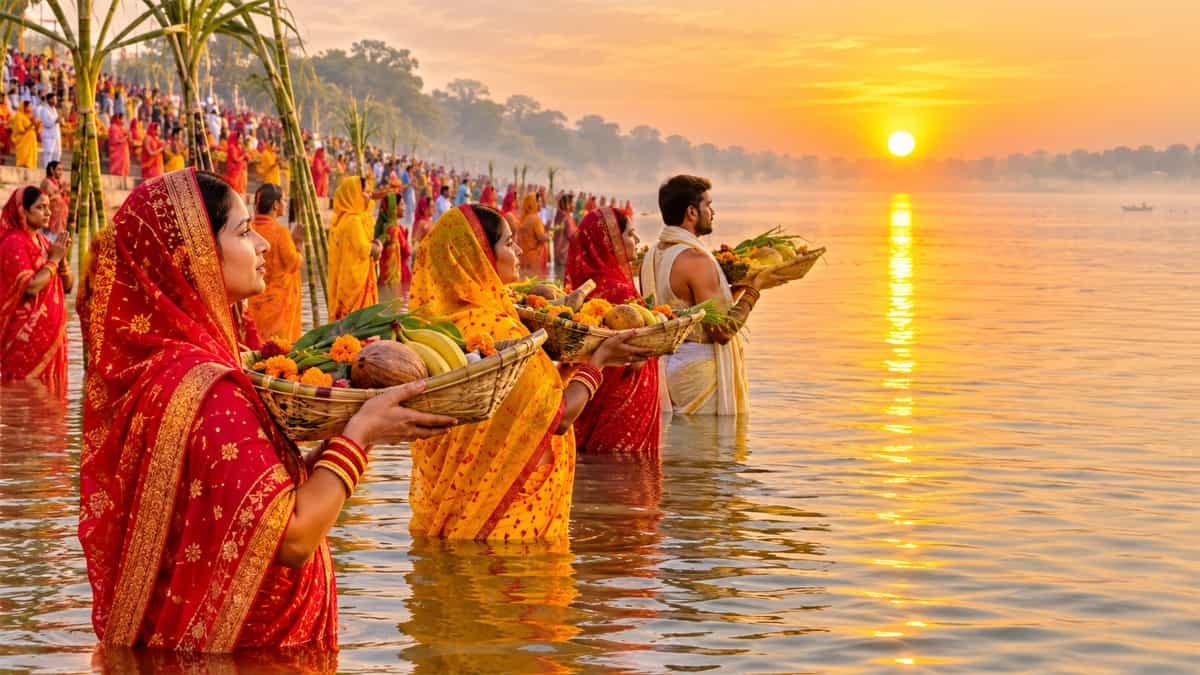
Chhath Puja is one of the most distinctive Hindu festivals dedicated to the worship of the Sun God, Surya Dev. Celebrated with deep devotion, particularly in Bihar, Jharkhand, eastern Uttar Pradesh and among Indian communities worldwide, this festival represents gratitude towards nature, discipline, purity and the life-giving power of the Sun.
However, there is an interesting question behind this ancient tradition.
If Chhath Puja is primarily dedicated to Surya Dev, why do devotees also worship Chhathi Maiya? Who is Chhathi Maiya, and what is her connection with Shashthi Devi?
The answer takes us into Hindu Puranic traditions, ancient beliefs about motherhood and the protection of children, and the spiritual significance of nature.
Chhath Puja is not simply a festival of offering water to the Sun. It is also a celebration of the relationship between human life, natural forces and divine protection.
Let’s explore its deeper meaning.
Who Is Chhathi Maiya?
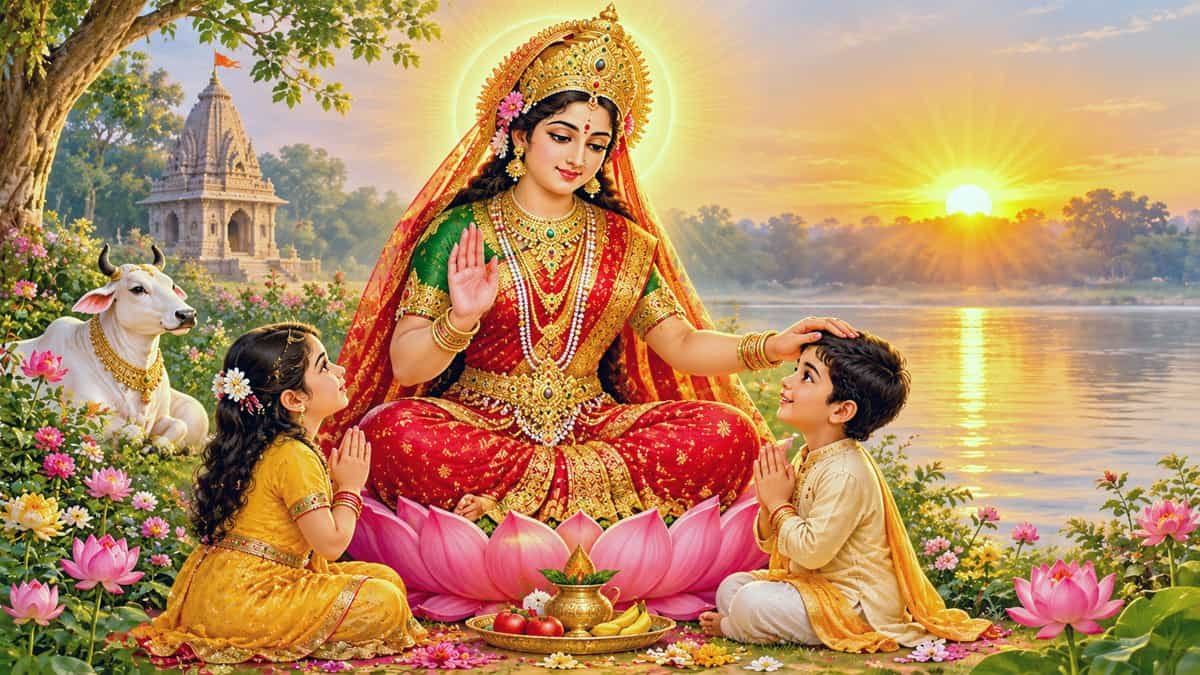
Chhathi Maiya is a revered mother goddess worshipped during Chhath Puja. In many regional traditions, she is identified with Shashthi Devi, a goddess associated with childbirth, motherhood, fertility and the protection of children.
The name Shashthi comes from the Sanskrit word Shashthi, meaning the sixth. This is also why the sixth lunar day, or Shashthi Tithi, holds special significance in the festival.
According to Puranic traditions, Shashthi Devi is associated with Goddess Devसेना, the consort of Lord Kartikeya (Skanda). She is described as a divine mother who blesses families and protects children.
In popular traditions of Bihar and eastern India, this divine maternal figure is lovingly worshipped as Chhathi Maiya.
Her worship reflects a deeply rooted belief: the well-being of a child is not only a family responsibility but also a sacred blessing.
Why Is She Called Chhathi Maiya?
The word Chhathi is closely associated with Shashthi, the sixth lunar day of the Hindu calendar, while Maiya is an affectionate word for mother.
Together, the name Chhathi Maiya expresses the image of a mother goddess associated with the sixth-day tradition and the protection of children.
In several Hindu households, the sixth day after a child’s birth is traditionally considered important for rituals associated with the child’s well-being and destiny. Customs differ between regions and families, but Shashthi Devi is widely associated with protecting newborns and supporting motherhood.
This association helps explain why Chhathi Maiya holds such a special emotional and spiritual place in Chhath celebrations.
She is not merely worshipped as a festival deity. For many devotees, she represents maternal protection, hope and the blessings of a healthy family.
The Story of Shashthi Devi and King Priyavrat
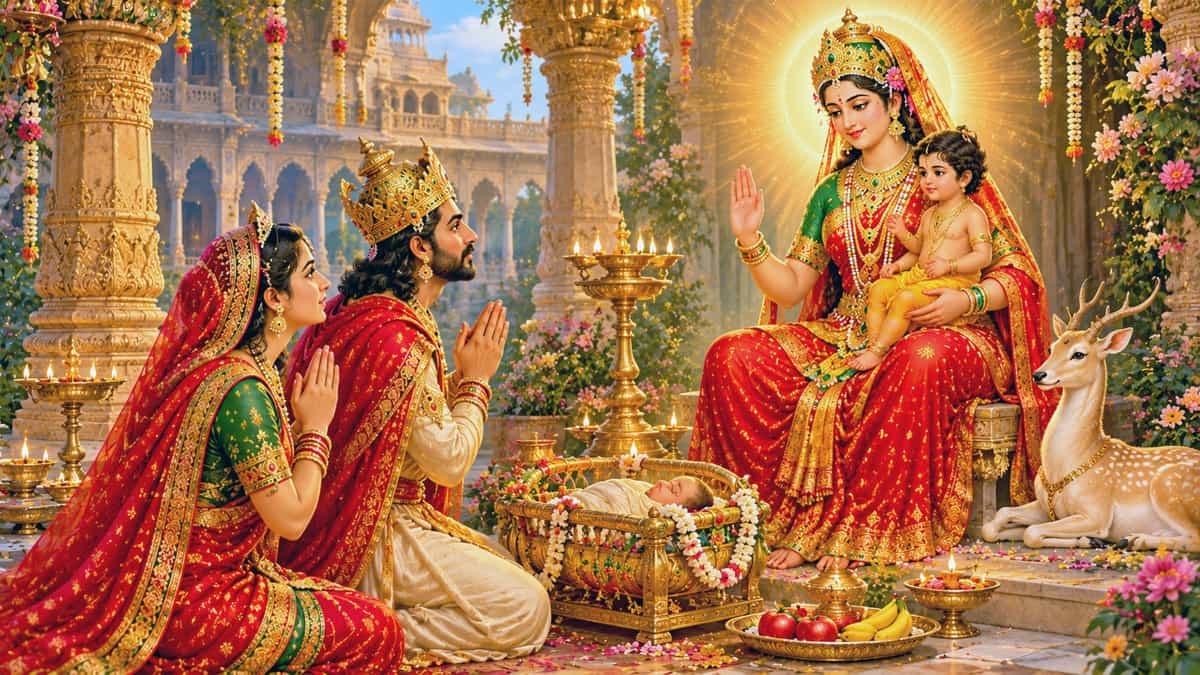
One of the important Puranic stories associated with Shashthi Devi appears in the Brahmavaivarta Purana.
According to the traditional account, King Priyavrat and his wife, Queen Malini, were deeply troubled because they had no children.
After performing religious observances, the queen gave birth to a child. However, the child was born lifeless, leaving the royal couple devastated.
At this moment, a divine goddess appeared. She identified herself as Devसेना, also known as Shashthi Devi, and was associated with Lord Kartikeya.
Moved by the king’s devotion, the goddess restored life to the child and blessed the royal family.
The king then worshipped the goddess and spread her worship among his people.
This story became an important part of the religious traditions surrounding Shashthi Devi.
Spiritual significance of the story:
The story expresses the belief that motherhood, childbirth and the protection of children are sacred aspects of life. It also explains why Shashthi Devi is remembered as a guardian of children and a giver of blessings to families.
It is important to understand that this is a Puranic religious narrative, not a historically documented event.
What Is the Connection Between Surya Dev and Chhathi Maiya?
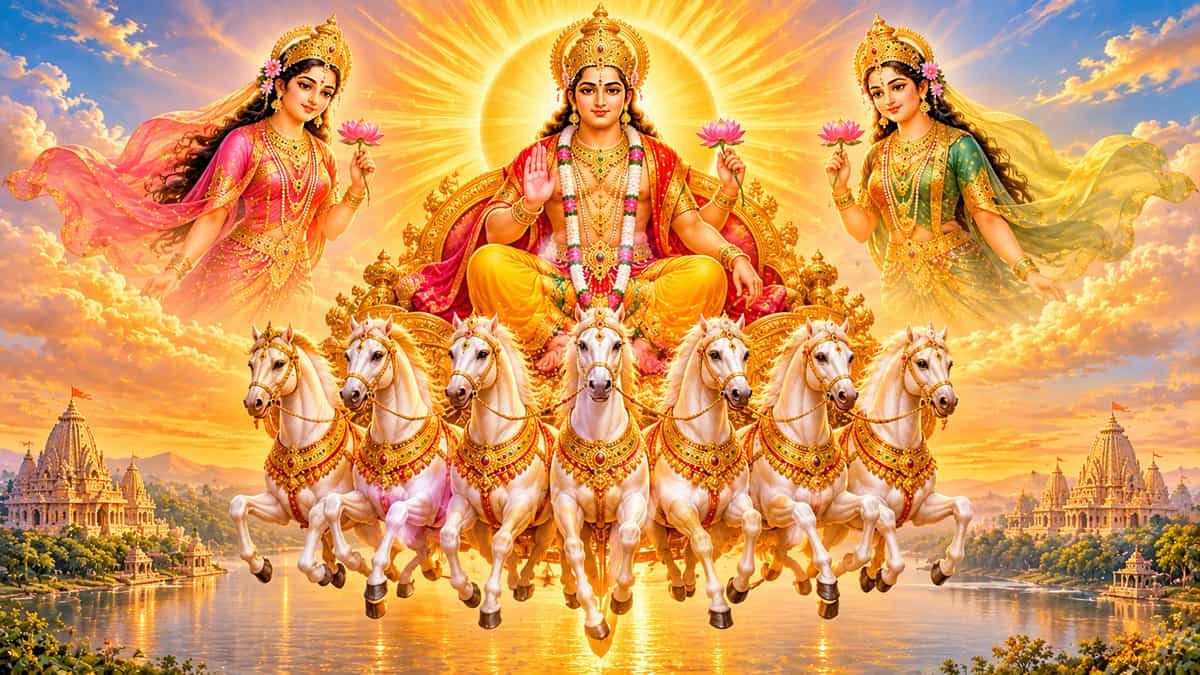
This is perhaps the most interesting aspect of Chhath Puja.
The festival brings together two important forms of divine reverence:
- Surya Dev: The source of light, warmth, energy and life.
- Chhathi Maiya: The maternal goddess associated with protection, motherhood and family well-being.
In different regional traditions, the precise relationship between Chhathi Maiya and Surya Dev is described differently.
Some traditions associate her with the divine feminine energies connected with the Sun, including Usha and Pratyusha. Other traditions identify her primarily with Shashthi Devi.
These descriptions should not automatically be treated as identical theological identities. They reflect the way different Hindu traditions and regional beliefs have developed around the festival.
The central idea, however, remains consistent: Chhath Puja honours the forces of nature that sustain life and seeks divine blessings for the well-being of the family.
Why Do Devotees Worship Both the Setting and Rising Sun?
Unlike many other Hindu observances, Chhath Puja gives equal ritual importance to the setting Sun and the rising Sun.
On the third day, devotees gather near rivers, ponds and other water bodies to offer Sandhya Arghya to the setting Sun.
The following morning, they return before sunrise to offer Usha Arghya to the rising Sun.
But why worship the Sun when it is setting?
There is a beautiful spiritual interpretation behind this practice.
Respect for every phase of life
The setting Sun represents the completion of a day. Worshipping it expresses gratitude for the energy and light received throughout the day.
Hope and renewal
The rising Sun represents a new beginning. Its appearance after darkness reminds devotees of renewal, continuity and hope.
Acceptance of nature’s cycle
Together, these two rituals acknowledge that nature operates through continuous cycles of beginning, growth, completion and renewal.
The practice teaches gratitude not only for new beginnings but also for what has already sustained us.
Why Is Water So Important in Chhath Puja?
Water is one of the most significant elements of Chhath Puja.
Devotees traditionally stand in rivers, ponds or other water bodies while offering Arghya to Surya Dev.
Water holds an important place in Hindu spiritual traditions. It is associated with purification, nourishment, fertility and the continuity of life.
The ritual of standing in water while offering Arghya brings together two essential natural elements:
- Water, which sustains living organisms.
- Sunlight, which supports life and the natural processes of the Earth.
The combination has a powerful symbolic meaning.
It reminds devotees that human existence depends on the balance of natural elements.
The presence of rivers and water bodies also connects Chhath Puja with the agricultural and cultural traditions of the Indo-Gangetic plains.
Why Are Fruits, Bamboo Baskets and Sugarcane Offered?
The offerings made during Chhath Puja are deeply connected with nature and seasonal produce.
Traditional offerings commonly include:
- Thekua
- Bananas
- Coconuts
- Sugarcane
- Seasonal fruits
- Rice-based offerings
- Other locally available agricultural produce
Bamboo baskets and traditional winnowing trays are used to carry these offerings.
These objects are not merely decorative elements. They reflect the agricultural roots of the communities that have preserved Chhath traditions for generations.
The offerings also express gratitude for the natural resources that provide food and nourishment.
In this sense, Chhath Puja is both a religious observance and an expression of respect for the natural world.
The Spiritual Meaning of the Four Days of Chhath Puja
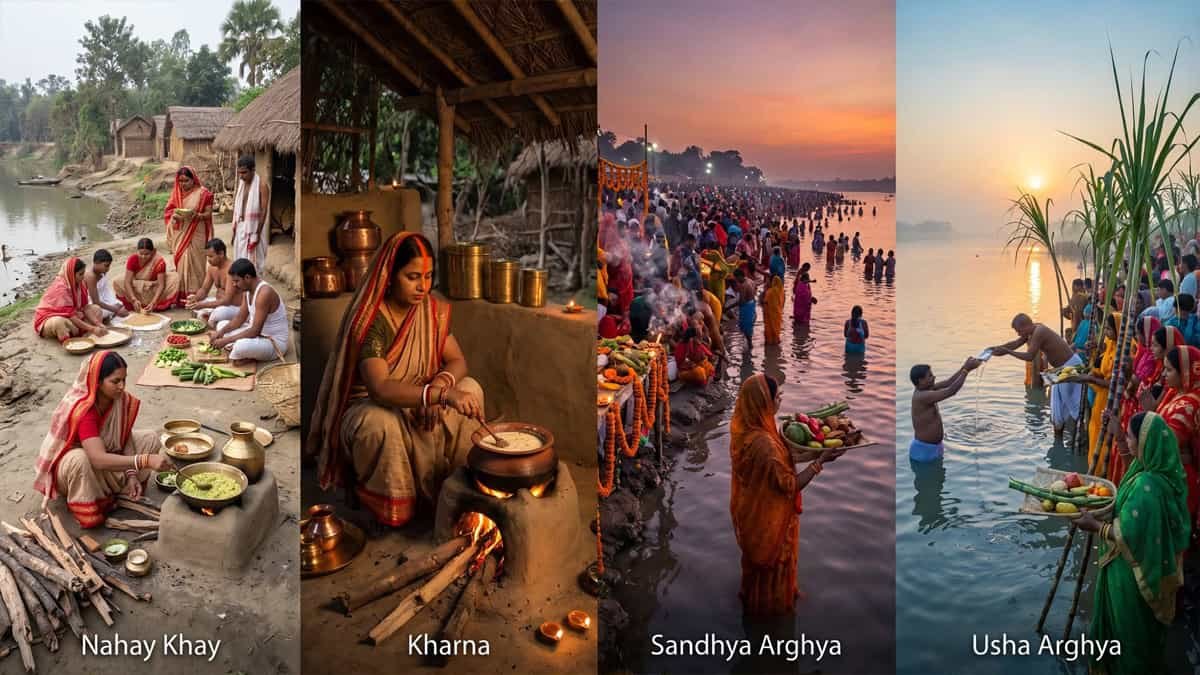
Chhath Puja is observed over four days, with each day carrying a distinct ritual significance.
Day 1: Nahay Khay
The observance begins with ritual bathing, cleanliness and the preparation of simple, pure food.
This day represents preparation and purification.
Day 2: Kharna
Devotees observe a day-long fast and perform evening worship before consuming the traditional Prasad.
After Kharna, the rigorous Nirjala fast begins for those observing the traditional fast.
This stage represents discipline, devotion and self-restraint.
Day 3: Sandhya Arghya
Devotees gather at water bodies and offer Arghya to the setting Sun.
This is one of the most visually and spiritually significant moments of Chhath Puja.
Day 4: Usha Arghya
Before sunrise, devotees return to offer Arghya to the rising Sun.
The fast concludes after the morning worship, followed by the distribution of Prasad.
Together, these four days represent a journey of purification, discipline, gratitude and spiritual devotion.
Is Chhath Puja a Vedic Festival?
Chhath Puja is frequently described as an ancient Vedic festival because of its close association with Surya worship.
Sun worship certainly has deep roots in Vedic literature. The Rigveda contains hymns dedicated to solar deities and the divine power of sunlight.
The famous Gayatri Mantra, for example, invokes Savitr, a solar deity associated with divine illumination.
However, it is important to distinguish between ancient Vedic solar worship and the specific rituals of today’s Chhath Puja.
The four-day observance, Chhathi Maiya traditions, regional folk songs, bamboo offerings and other customs belong to a broader historical and cultural development.
There is not enough evidence to establish that every element of the modern Chhath festival existed in exactly the same form during the Vedic period.
A more accurate understanding is that Chhath Puja brings together ancient Hindu traditions of solar worship, Puranic beliefs and regional folk practices.
What Makes Chhath Puja Different From Other Hindu Festivals?
Chhath Puja has several distinctive features.
Direct worship of natural forces
The Sun and water bodies are central to the observance. Devotees express gratitude directly through offerings to Surya Dev.
Strict personal discipline
The festival involves fasting, cleanliness, self-restraint and careful preparation of Prasad.
Equal importance to the setting and rising Sun
Both Sandhya Arghya and Usha Arghya are essential parts of the celebration.
Community participation
People from different backgrounds gather at riverbanks and ghats to participate in the celebrations.
A strong connection with family and motherhood
The worship of Chhathi Maiya reflects prayers for children’s well-being, family happiness and protection.
These elements make Chhath Puja a distinctive expression of devotion, cultural identity and respect for nature.
The Deeper Meaning of Chhathi Maiya and Chhath Puja
Chhath Puja is much more than an annual celebration of the Sun.
It brings together two important dimensions of Hindu spiritual thought: gratitude towards the natural forces that sustain life and faith in the divine protection associated with motherhood.
Surya Dev represents the light and energy without which life cannot continue. Chhathi Maiya, in the Shashthi Devi tradition, represents maternal protection and blessings for children and families.
The worship of the setting Sun teaches gratitude, while the worship of the rising Sun expresses hope and renewal.
Perhaps this is the deeper message of Chhath Puja: life is sustained by nature, strengthened by discipline and enriched by gratitude.
And that is why, for millions of devotees, Chhathi Maiya is not simply a name associated with a festival. She is worshipped with the affection, faith and reverence reserved for a mother.
Frequently Asked Questions
1. Who is Chhathi Maiya in Hindu mythology?
Chhathi Maiya is a mother goddess worshipped during Chhath Puja. In many regional traditions, she is identified with Shashthi Devi, who is associated with childbirth and the protection of children.
2. Is Chhathi Maiya the same as Shashthi Devi?
In many traditions, yes. Chhathi Maiya is commonly identified with Shashthi Devi, although regional interpretations and associations may differ.
3. Is Chhathi Maiya the wife or sister of Surya Dev?
There is no single universally accepted identification across all traditions. Some regional accounts associate her with solar feminine energies, while others identify her with Shashthi Devi. These traditions should be understood separately.
4. Why is Chhath Puja celebrated on the sixth day?
The festival’s name is commonly associated with Shashthi, the sixth lunar day. The principal evening offering takes place on Kartik Shukla Shashthi.
5. Why is the setting Sun worshipped during Chhath Puja?
The evening offering expresses gratitude towards the Sun even as it completes its daily journey. The following morning’s offering celebrates renewal and the return of sunlight.
6. What is the connection between Chhath Puja and Surya Dev?
Surya Dev is the principal solar deity worshipped during the festival. Devotees offer Arghya to the setting and rising Sun, expressing gratitude for the energy and life sustained by sunlight.
7. Is Chhath Puja mentioned in the Vedas?
Vedic literature contains extensive references to solar worship, including hymns to Surya and Savitr. However, the exact four-day form of modern Chhath Puja should not be attributed directly to the Vedas without specific textual evidence.


